You’re looking at $5 to $20 per linear foot just for labor in Jacksonville, FL, though the total project (materials plus labor) usually runs $20 to $60 per linear foot. That means a typical fence project could cost anywhere from $2,000 to over $12,000, depending on what you’re building and how complex the job gets.
Here’s the thing: those numbers are just ballpark figures. Your actual cost depends on several factors, including the material you choose, the height you want, whether your yard is flat or sloped, and the type of soil you have. A simple chain-link fence on level ground? You’ll pay way less than a tall vinyl privacy fence going up a hill.
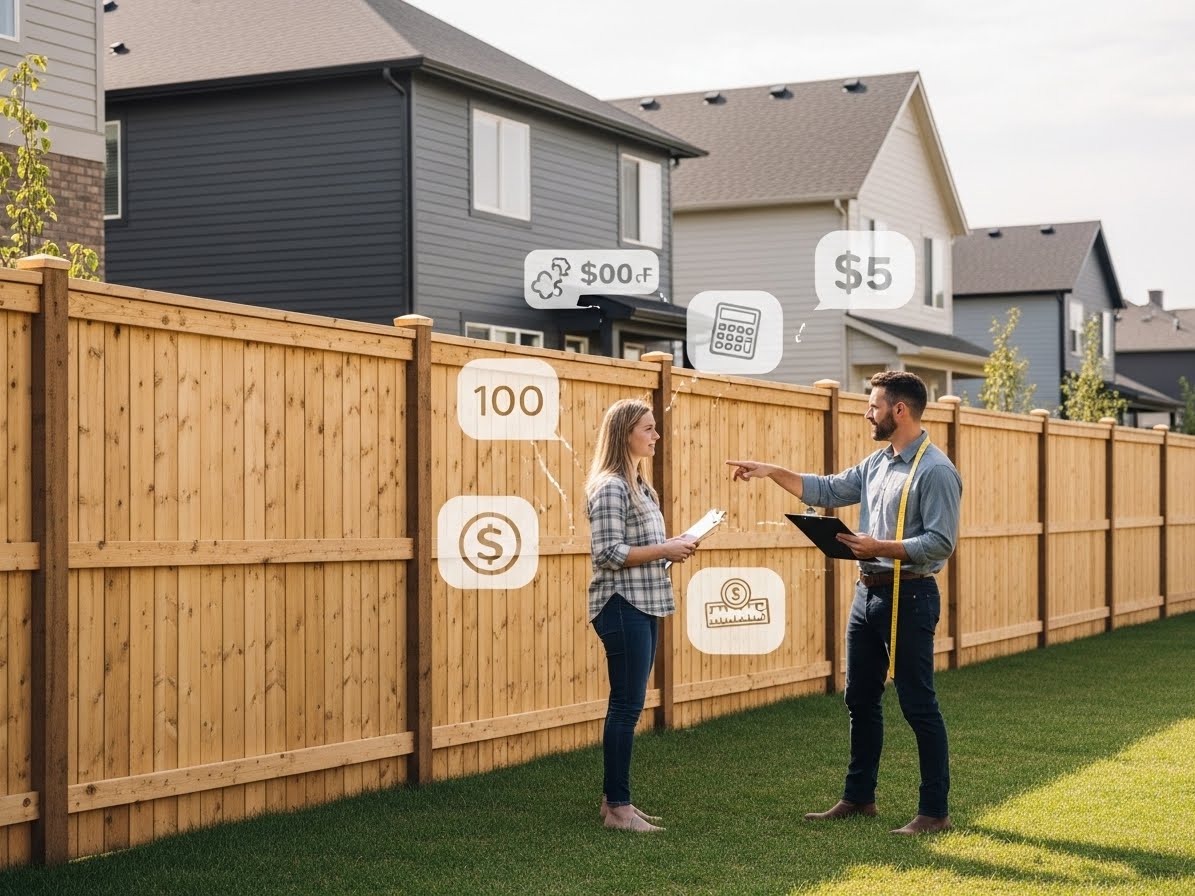
Getting quotes from local fence contractors is the only way to know what you’ll really spend. They’ll walk your property, check out the terrain, and give you a number that actually makes sense for your situation.
What Does Fence Labor Cost Include?
When you hire someone to install your fence, you’re not just paying them to hammer a few boards together. There’s a lot more happening behind the scenes.
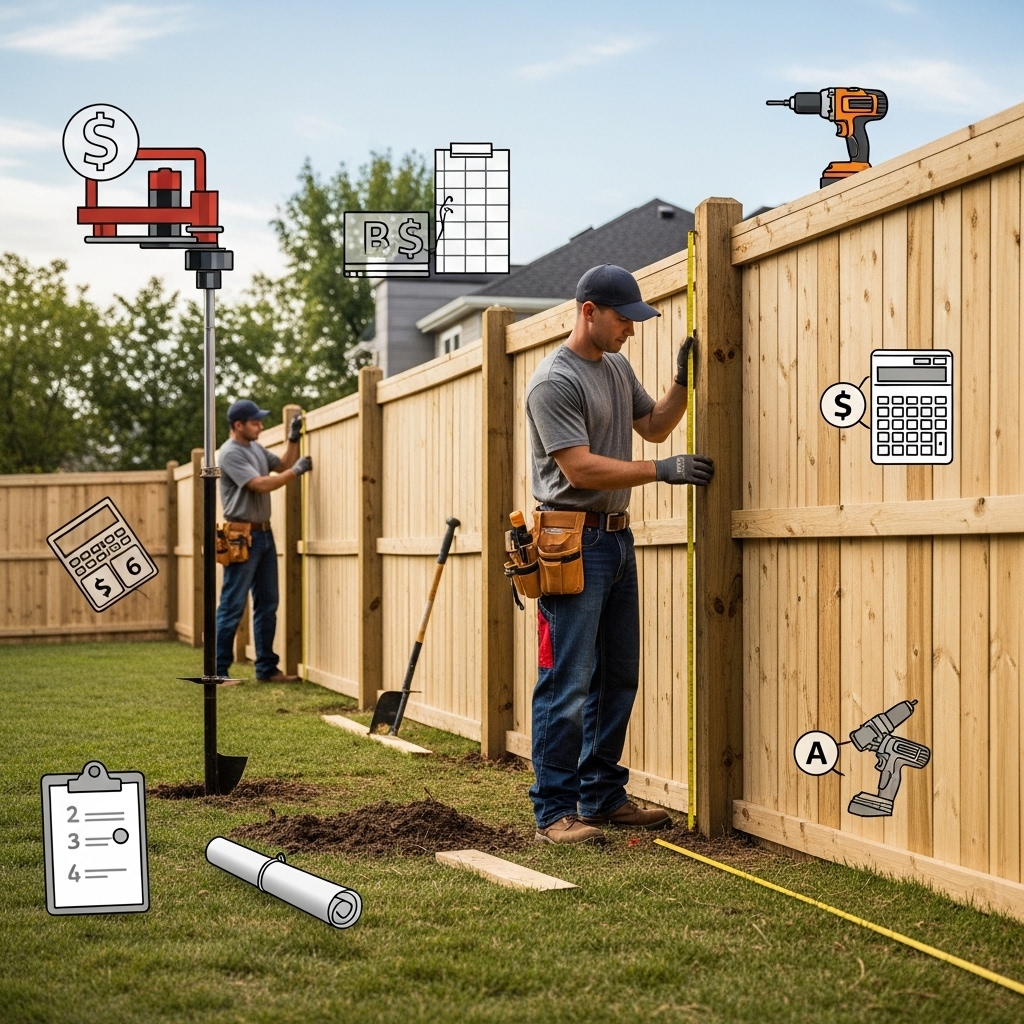
Site preparation comes first. The crew clears away brush, marks property lines, and gets everything ready for the actual installation. Sometimes they’re dealing with rocks, roots, or other obstacles that make the job trickier.
Post-digging and setting is where the real muscle work happens. Workers dig holes for every fence post—usually about 2 to 3 feet deep—then set the posts in concrete or gravel. This part takes time and effort, especially if you’ve got hard clay or rocky soil.
Fence panel installation follows once the posts are secure. The crew attaches rails, pickets, or panels to create the actual fence structure. Getting everything level and properly aligned matters here.
Gate installation adds another layer of complexity. Gates need special hardware, hinges, and latches. They have to swing smoothly and close securely, which requires precision.
Cleanup and disposal wrap things up. The crew hauls away old fencing (if you’re replacing), removes debris, and leaves your yard looking good.
Some jobs also require permits and inspections, which your contractor should handle. They’ll know what your local building department requires and make sure everything meets code.
Average Fence Labor Cost Per Linear Foot
Labor costs shift quite a bit based on what type of fence you’re installing. Let’s break it down by material.
Labor Cost by Fence Type
Wood fences typically cost $8 to $20 per linear foot for labor alone. Wood takes more time to install because each board needs individual placement and fastening. Cedar and pressure-treated pine are popular choices, and they both require careful handling to prevent splitting or warping during installation.
Vinyl fences run about $10 to $18 per linear foot for labor. Vinyl is lighter than wood, which sounds like it would be easier to work with. But the panels need precise alignment, and the interlocking system takes patience. One wrong move and you’re starting over with that section.
Chain-link fences are the most budget-friendly at $5 to $12 per linear foot for labor. They go up faster than other types because the process is more straightforward. Stretch the fabric, attach it to the posts, add tension wire, and you’re done. Perfect if you just need to contain a pet or mark boundaries.
Aluminum or steel fences hit the higher end at $12 to $25+ per linear foot. These materials are heavier and often more decorative. Ornamental iron fences with custom designs or powder-coated finishes take even more time and skill to install properly.
Total Fence Installation Cost vs Labor Cost
Understanding the difference between labor and total cost helps you budget smarter. Here’s what you can expect when you combine materials and installation:
Fence Type | Labor Cost (per linear foot) | Total Installed Cost (per linear foot) |
Wood | $8–$20 | $25–$50 |
Vinyl | $10–$18 | $30–$60 |
Chain Link | $5–$12 | $15–$40 |
So if you’re installing 150 linear feet of wood fencing, your labor might be $1,200 to $3,000, but your total project could hit $3,750 to $7,500 once you add materials.
Materials make up a big chunk of that difference. Vinyl costs more per panel than wood. Chain-link is cheap. Premium cedar costs more than basic pine. You get the idea.
What Factors Affect Fence Labor Pricing?
A ton of variables influence what you’ll actually pay for installation. Some are obvious, but others catch people off guard.
Fence material is the big one we’ve already covered. Wood, vinyl, chain-link, and metal all require different installation techniques and timeframes.
Fence height and length directly impact labor hours. A 4-foot fence takes less material and less time than a 6-foot privacy fence. And obviously, fencing 50 feet costs less than fencing 200 feet.
Soil condition matters more than most homeowners realize. Rocky soil means slower digging, sometimes requiring special equipment. Clay can be dense and difficult. Sandy soil is easier but might need deeper post holes for stability.
Terrain can turn a simple job into a headache. Flat yards are straightforward. Sloped or uneven yards require stepped or racked fencing, which takes extra time to measure and install correctly. Every angle has to be calculated.
Access to the job site affects pricing too. Can the crew drive right up to your backyard, or do they need to carry materials through your house? Is there a gate wide enough for equipment? Limited access means more manual labor, which means higher costs.
Removal of an old fence adds to the bill if you’re replacing existing fencing. Demolition, hauling, and disposal all cost money. Some companies charge a flat rate for removal, while others bill by the hour.
Local permit requirements vary by city and county. Some places require permits for any fence over a certain height. Others have strict rules about property line setbacks. Your contractor should handle this, but it adds administrative time and fees to the project.
Can a Handyman Install a Fence?
Sure, a handyman can install a fence, but whether they should is a different question.
The biggest advantage is lower upfront labor cost. Handymen typically charge less per hour than specialized fence contractors. If you’re on a tight budget and have a small, simple project, this might work.
They’re also good for small repairs or minor installations—like fixing a gate that won’t close properly or replacing a few damaged fence panels. For these kinds of fence installation and repair jobs, a skilled handyman can save you money.
But here’s where it gets dicey. Many handymen aren’t licensed or insured specifically for fencing work. If something goes wrong—someone gets hurt, your property gets damaged, or the fence fails—you could be stuck with the liability and the repair bill.
You also get limited warranty protection with handyman work. Professional fence companies usually guarantee their work for at least a year, sometimes longer. Handymen rarely offer written warranties.
And let’s be honest: experience matters. Full fence replacement projects require knowledge of post spacing, proper depth, tension for chain-link, and how to handle tricky terrain. A handyman who mostly does small repairs might not have that expertise.
Best use case? Hire a handyman for minor fence installation and repair tasks, not complete fence replacement projects. For anything more than a few panels or a gate fix, go with a licensed fence contractor.
How Much Should You Charge to Put Up a Fence?
This section’s for the contractors and fence companies reading along, but homeowners might find it interesting too. Understanding how professionals price their work helps you spot fair quotes versus lowball estimates that’ll cause problems later.
The basic pricing formula looks like this:
Labor + Materials + Overhead + Profit Margin = Final Quote
Most fence companies aim for a 20% to 35% profit margin after covering their costs. That’s not gouging—it’s standard business practice that allows them to stay operational, invest in equipment, and provide good service.
Here’s a sample calculation for a typical residential fence:
- Labor: $1,500 (crew wages, hours on site)
- Materials: $2,000 (posts, panels, concrete, hardware)
- Overhead: $500 (insurance, truck expenses, tools, permits)
- Target Profit: $1,000 (20% margin)
Final Quote: $5,000
When a contractor gives you a quote that seems high, remember they’re not pocketing all that money. They’ve got real expenses to cover before they see any profit.
If a quote seems suspiciously low compared to others, that’s a red flag. Either they’re cutting corners on materials, underinsured, or inexperienced and underestimating the job. You usually get what you pay for with fence installation.
DIY vs Professional Fence Installation
Thinking about doing it yourself? Let’s weigh the pros and cons honestly.
Factor | DIY | Professional |
Cost | Lower upfront (just materials and tool rental) | Higher but includes expertise and warranty |
Quality | Varies based on your skill level | Consistent, professional results |
Time | Could take several weekends | Usually done in 1-3 days |
Warranty | None—you’re on your own | Most companies offer 1+ year guarantees |
Cost is where DIY looks attractive. You’re only paying for materials and maybe some tool rentals. No labor charges. For a simple 100-foot chain-link fence, you might save $500 to $1,200 by doing it yourself.
But quality is hit or miss. If you’re handy and have installed fences before, you might do great. If this is your first time, expect some learning curve mistakes—posts that aren’t quite level, gates that don’t hang right, or panels that aren’t properly aligned.
Time is the hidden cost of DIY. What takes a professional crew a day or two might take you multiple weekends. You’ll spend hours digging post holes, leveling everything, and troubleshooting problems. That’s time away from family, relaxation, or other projects.
And there’s no warranty when you DIY. If your fence starts sagging next year because the posts weren’t set deep enough, you’re fixing it on your own dime. Professional installers stand behind their work.
For small, straightforward projects on flat ground, DIY can work. For anything involving slopes, hard soil, or tall privacy fences, hiring professionals usually makes more sense.
How to Get an Accurate Fence Labor Quote
Don’t just grab the first estimate you find online. Getting a real, accurate quote takes a bit of legwork.
Get three local estimates at a minimum. This gives you a range to work with and helps you spot outliers—quotes that are way too high or suspiciously low.
Ask for itemized pricing. You want to see labor costs, material costs, and any additional fees broken out separately. A quote that just says “$6,000 for fence installation” doesn’t tell you much. An itemized quote shows exactly where your money goes.
Verify license and insurance. Ask for proof that the contractor is licensed to work in your area and carries liability insurance plus workers’ comp. This protects you if someone gets hurt on your property or if something gets damaged.
Check references and reviews. Look at their Google reviews, ask for photos of recent projects, and call a couple of past customers if possible. A contractor with a solid track record is worth paying a bit more for.
Meet with contractors on-site so they can see your property firsthand. Measurements, soil conditions, and access issues all affect pricing. A quote based on a phone call is just a guess.
Common Fence Installation Mistakes
Even professional installers sometimes mess up, and DIYers make these mistakes constantly. Knowing what to watch for helps you avoid problems.
Incorrect post spacing is a classic error. Posts set too far apart create weak sections that sag over time. Posts too close together waste materials and look odd. Standard spacing is usually 6 to 8 feet, depending on the fence type.
Poor leveling ruins the whole look. A fence that dips and rises unevenly looks unprofessional and might not function properly. Gates won’t swing right, panels won’t align, and the whole structure weakens.
Using the wrong materials for your climate or purpose causes premature failure. Untreated wood in wet climates rots quickly. Chain-link that’s too light-gauge sags. Vinyl that’s not UV-resistant fades and becomes brittle.
Skipping permits seems like a time-saver until the city inspector shows up and orders you to tear everything down. Most municipalities require permits for fences over a certain height or within certain distances from property lines. Your contractor should handle this, but verify they’re doing it.
Final Thoughts on Fence Labor Costs
Choosing the right contractor for your fence project isn’t just about finding the lowest price. Quality installation means better results, fewer repairs down the road, and higher property value if you ever sell.
Whether you need fence installation and repair or complete fence replacement, investing in experienced labor pays off. A well-installed fence lasts 15 to 25 years or more with basic maintenance. A poorly installed one might start having problems within a few years.
Get those multiple quotes, check credentials, and ask questions. The contractor who takes time to explain the process and answer your concerns is usually worth the slightly higher price.
And remember: in Jacksonville’s climate, with our humidity, rain, and occasional storms, proper installation technique matters even more. Posts need to be set deep enough to handle wind loads. Materials need to withstand moisture. These aren’t details to cheap out on.
A good fence does more than mark boundaries or add privacy. It enhances your outdoor space, protects your family and pets, and completes the look of your home. That’s worth doing right the first time.