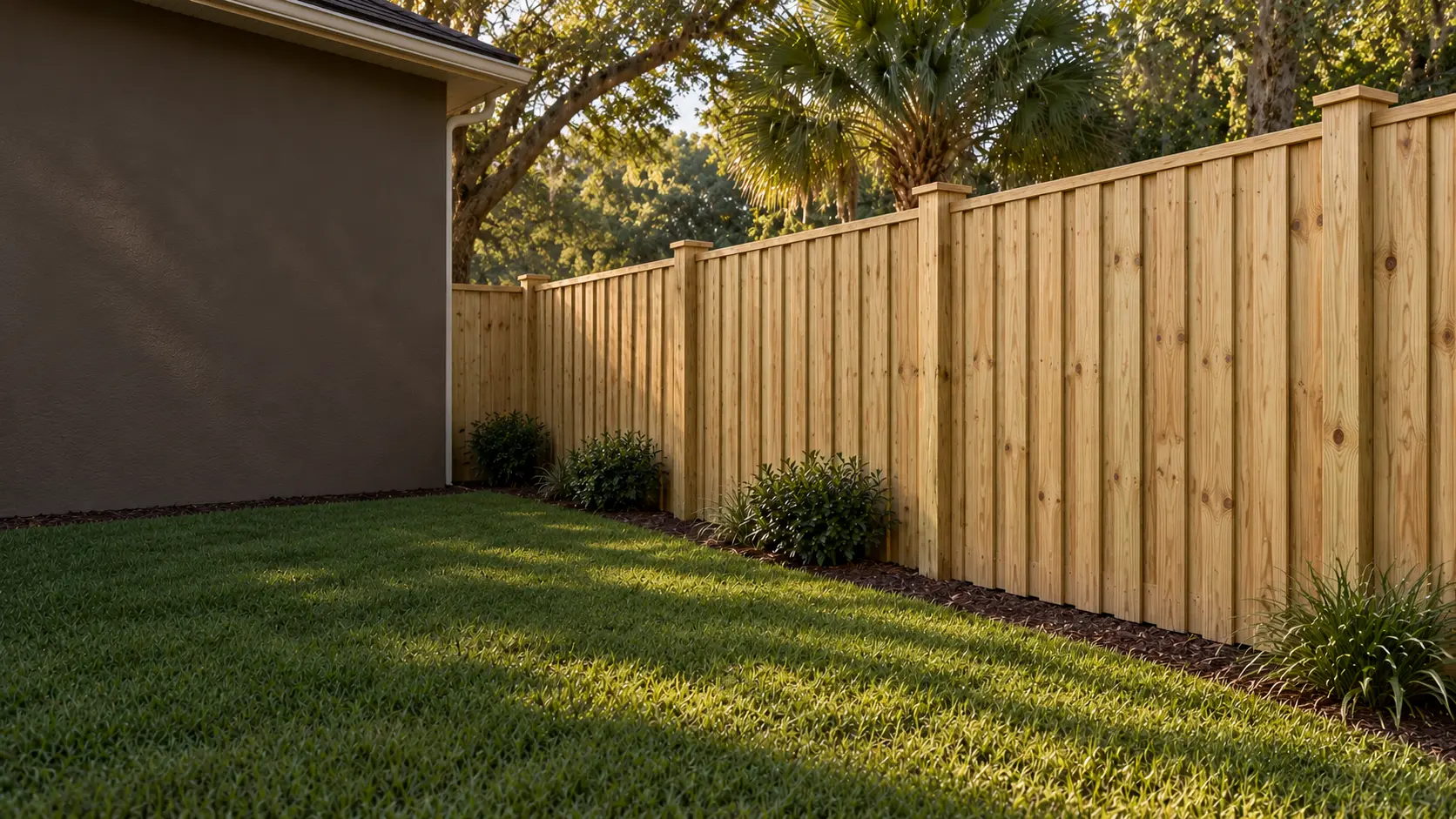
Jacksonville Wood Fence Services
Wood Fence Installation and Repair in Jacksonville, FL
Wood fencing can create privacy, define a property boundary, separate outdoor areas or add a traditional finish to a Jacksonville yard. Its performance depends on stable posts, sound rails, suitable fasteners, ground clearance, drainage and properly planned openings.
Share your ZIP code, approximate fence length, preferred style and photographs of existing damage so the requested installation, repair or replacement scope can be identified.
- Privacy Fences
- Stockade
- Board-on-Board
- Shadowbox
- Picket Fences
- Posts & Rails
- Repairs
- Replacement
Quick Answer
When Do You Need Wood Fence Repair or Replacement?
A wood fence needs attention when boards are loose or missing, rails separate, posts lean or move, fasteners pull out, sections sag or decay appears near the soil line. Limited damage may be repairable when the surrounding structure remains sound. Replacement may be more practical when deterioration affects multiple sections, several posts have failed or the fence no longer provides the required privacy or containment. Avoid pushing, climbing on or attaching weight to an unstable section. Request wood fence service when the condition cannot be judged safely from the visible boards.
New Wood Fencing
Wood Fence Installation for Privacy and Boundaries
A useful wood fence begins with the purpose of the enclosure. A backyard privacy fence has different sightline and airflow needs than a decorative front-yard fence. A side-yard enclosure must also account for access, utilities, equipment and connections to the property.
- Confirming the intended fence line
- Selecting an appropriate height and wood-fence style
- Measuring the total run and changes in direction
- Accounting for slopes and uneven ground
- Locating walk-gate or driveway-gate openings
- Choosing posts, rails, pickets and compatible fasteners
- Maintaining clearance from soil and standing water
- Considering privacy, airflow, pets and landscaping
- Reviewing HOA, deed, zoning and pool-barrier requirements
The finished layout should reflect actual property conditions rather than assuming that a curb, sidewalk, hedge or older fence marks the legal boundary.
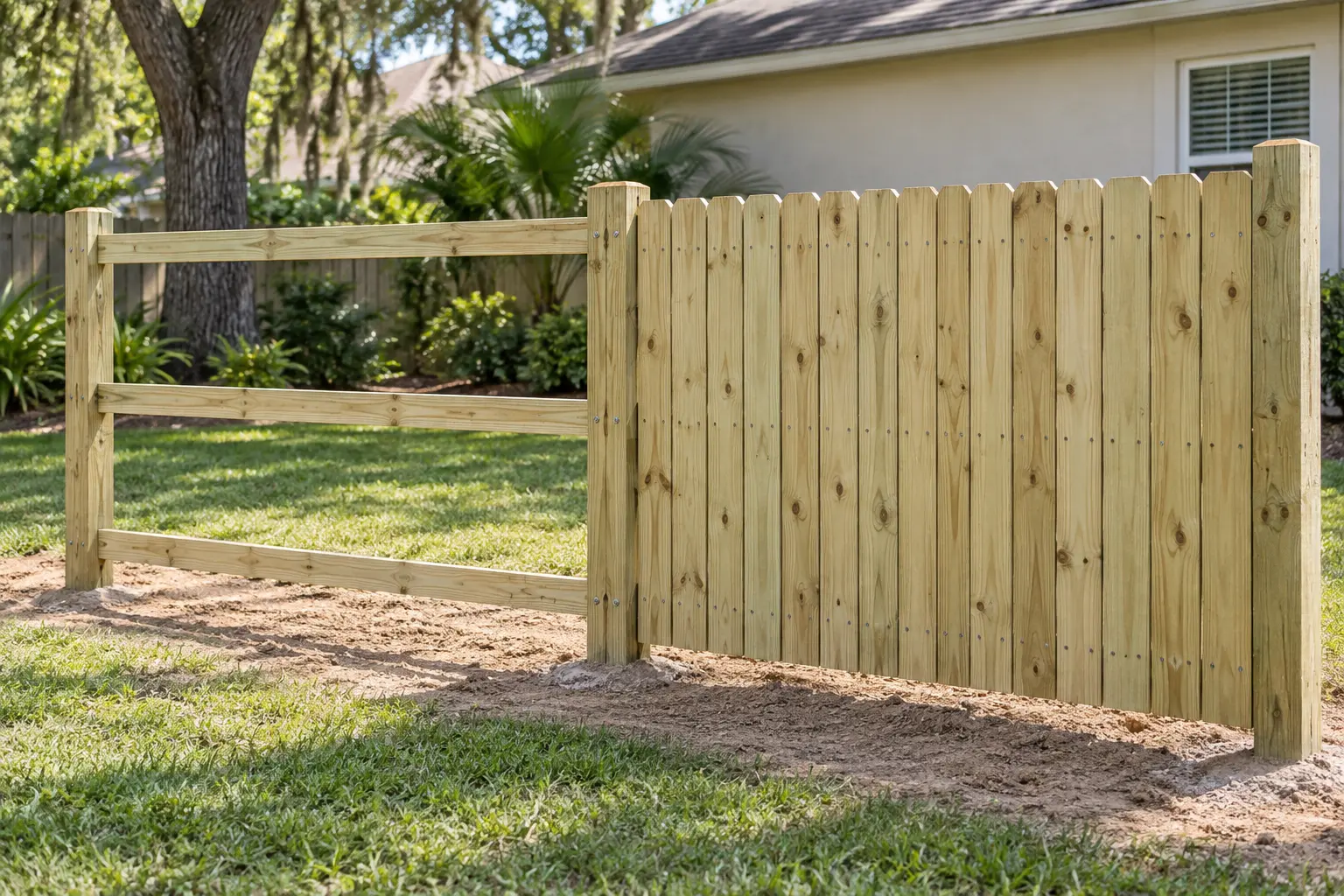
Privacy, Airflow & Appearance
Compare Wood Fence Styles
Different layouts provide different levels of privacy, airflow and visibility. The right choice depends on the property rather than one style being universally better.
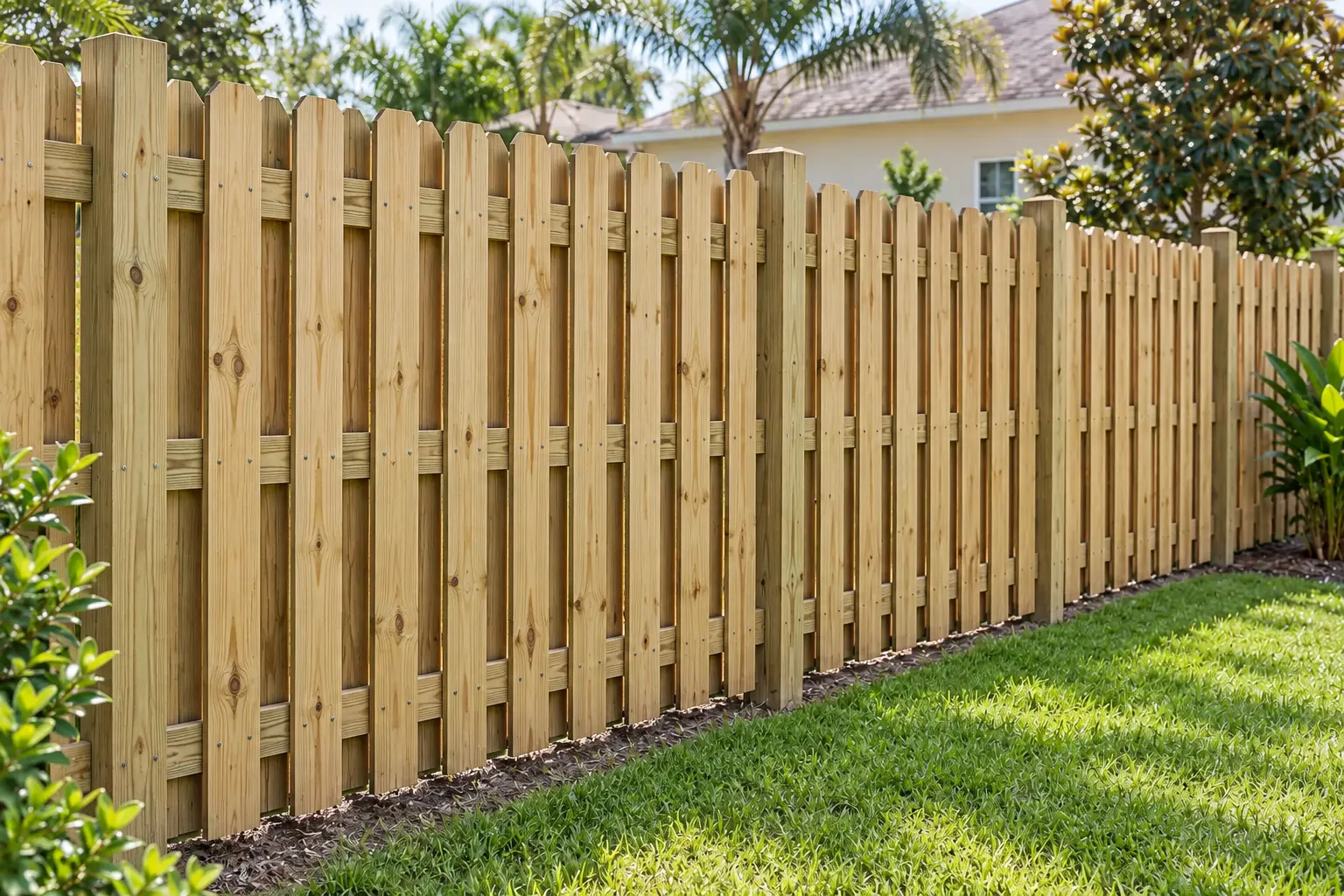
| Wood fence style | Arrangement | Often considered when |
|---|---|---|
| Stockade or side-by-side privacy | Vertical boards are placed closely beside one another | A straightforward privacy screen is wanted |
| Board-on-board | Boards overlap to reduce direct sightlines | Greater visual coverage is a priority |
| Shadowbox | Boards alternate between the two sides of the rails | Airflow and a finished appearance from both sides matter |
| Spaced picket | Pickets have intentional gaps | Boundary definition and visibility are preferred |
| Horizontal wood fence | Boards run horizontally across the posts | A different visual layout is requested and framing can support it |
Natural wood can expand, contract, check or change color as it weathers. Style selection should account for how these normal changes may affect privacy and appearance over time.
Look Beyond the Boards
Important Parts of a Wood Fence
A stable fence depends on its structural components working together. Visible board damage may be only one part of the condition.
Posts and Footings
Posts transfer fence weight and wind force into the ground. Movement or deterioration can cause an otherwise intact section to lean.
Horizontal Rails
Rails connect the posts and support boards. Split, loose or sagging rails can allow sections to bow or separate.
Pickets and Boards
Spacing and fastening affect privacy and movement. Ground clearance helps limit prolonged moisture contact at the lower edge.
Fasteners and Connections
Compatible outdoor fasteners help keep boards and rails secure as the lumber responds to weather exposure.
Gate Openings
Gate size, post support, frame stiffness and hardware require separate planning. Review wood fence gate installation and repair when the opening needs service.
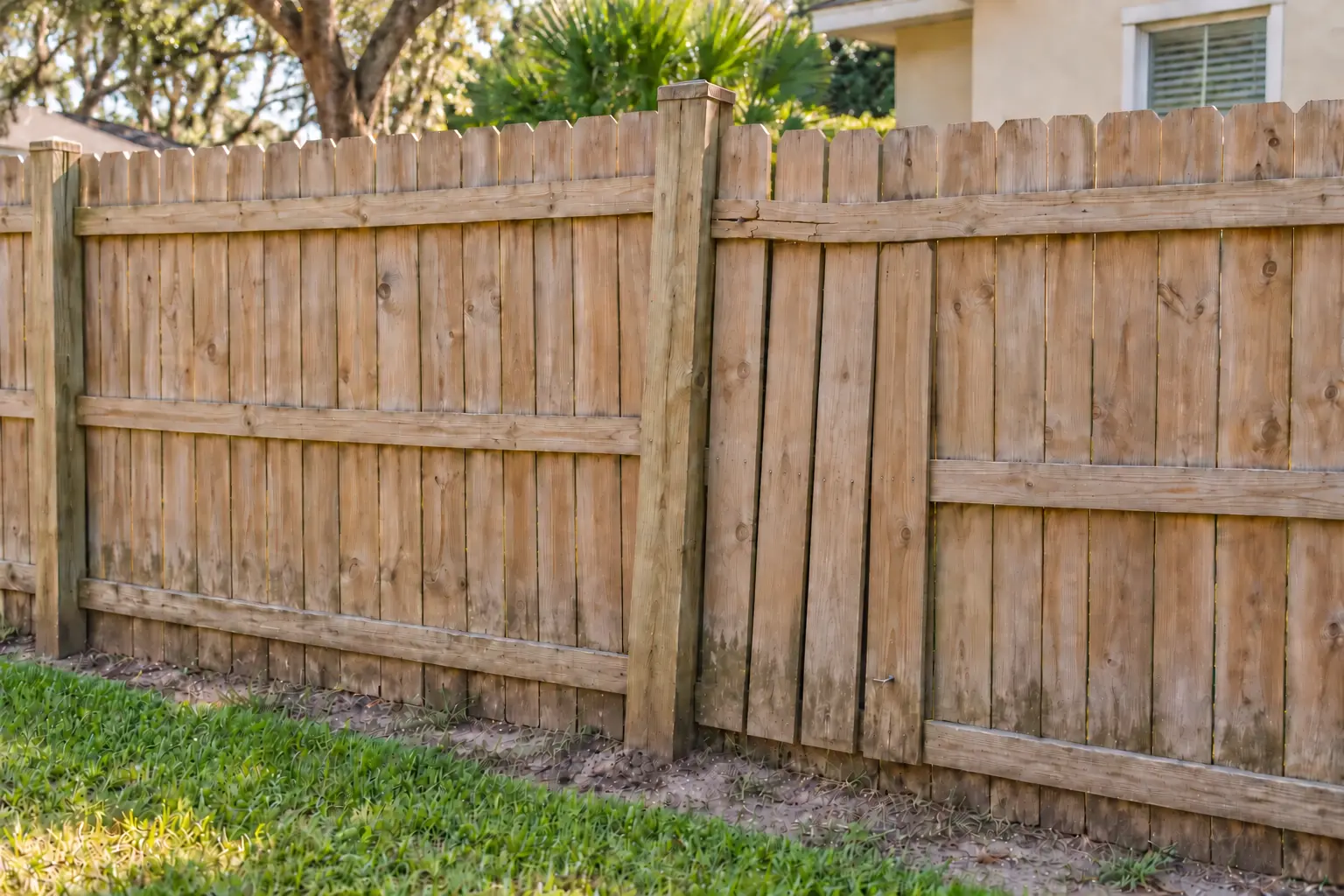
Posts, Rails & Boards
Wood Fence Repair in Jacksonville
Wood fence repair should address the cause of failure, not only the most visible symptom. Refastening a loose board will not stabilize a section if the rail behind it is split. Replacing boards will not correct a fence that leans because several posts have moved.
- Loose, cracked or missing pickets
- Broken or separated rails
- Leaning fence sections
- Unstable, damaged or deteriorated posts
- Fasteners pulling out of the wood
- Gaps caused by board movement or damage
- Localized impact or storm-related damage
- Sections affected by vegetation or poor drainage
- Fence-to-gate connection problems
The repair area should be considered together with neighboring posts and sections. A narrow repair is most useful when the remaining structure can support it.
Condition-Based Decision
Repair or Replace the Wood Fence?
The decision depends on how far the damage extends and whether a repair can restore a stable, useful fence.
| Condition | Repair may be reasonable when | Replacement may be more practical when |
|---|---|---|
| Damaged boards | Damage is limited and the rails remain sound | Boards are failing across several sections |
| Leaning section | One post or connection has a correctable problem | Multiple posts or footings have shifted or deteriorated |
| Broken rail | The surrounding posts and boards remain usable | Several rails are split, sagging or detached |
| Rot or decay | The affected material is isolated and removable | Decay is widespread or reaches structural components |
| Privacy loss | A small number of boards have moved or broken | The layout or overall condition no longer provides suitable coverage |
| Repeated repairs | The new problem is unrelated and localized | The same sections continue failing after earlier work |
Appearance alone does not show whether the underlying posts, rails and connections remain dependable.
Material and Maintenance
Wood Selection, Maintenance and Jacksonville Exposure
Wood choice and installation details matter, but no wood fence is maintenance-free or immune to decay, insects and weathering.
Wood Selection and Ground Contact
Wood used near or in the ground needs appropriate resistance to decay and wood-destroying insects. Product treatment category, cut ends, hardware compatibility and intended exposure should be confirmed for the project.
Pressure-treated pine is commonly considered for outdoor fence components, while naturally decay-resistant species may be available for some designs. Treated lumber should not be described as rot-proof or termite-proof.
Wood Fence Maintenance and Protection
Jacksonville sun, rain, humidity, vegetation and severe-weather exposure can contribute to weathering, moisture retention, movement and stress around posts and fasteners.
- Keep soil, mulch and debris away from boards where possible
- Address standing water near posts
- Trim vegetation that traps moisture or pushes on the fence
- Check posts, rails and connections after strong wind or impact
- Follow product instructions when a protective finish is used
Wood fence staining and sealing is a separate service scope and should not be confused with structural repair. Do not cover soft, decayed or unstable wood and assume the underlying problem has been corrected.
Project Variables
What Affects Wood Fence Cost and Scheduling?
An accurate price and schedule require the actual layout, material choice, access conditions and repair or installation scope. Photographs can help define the request, but hidden post or footing conditions may not be visible until closer assessment.
Local Planning
Jacksonville Property-Line, Height and Digging Considerations
Confirm requirements for the actual parcel before finalizing a fence line, height or pool-barrier design.
Property Lines and Fence Height
Jacksonville says a fence may generally be placed on the property line or elsewhere on the property depending on the zoning district, but a survey is needed to establish that line accurately. The city generally limits height to four feet within the front-yard setback and allows up to eight feet farther toward the rear, with corner-lot visibility considerations.
Review Jacksonville zoning guidance →Underground Utility Marking
Before digging post holes, submit a locate request to Sunshine 811 at least two full business days before excavation so participating utilities can mark underground facilities. Some private irrigation, lighting or customer-owned lines may require separate locating.
Review Sunshine 811 guidance →Wood Fences Around Pools
A standard privacy fence should not be assumed to satisfy pool-barrier requirements. Florida law addresses barrier height, openings, climbability, placement and gate operation. The complete fence and gate arrangement must meet the applicable requirements.
Review Florida pool-barrier law →Define the Work Clearly
How the Wood-Fence Service Process Works
Describe the Project
Provide the ZIP code, approximate fence length, intended purpose and whether the request involves installation, repair or replacement.
Share Existing Conditions
For repairs, send photographs of both sides of the affected section, including posts, rails, boards, lower edges and nearby openings.
Confirm Layout and Scope
Review the proposed line, height, style, gate openings, access, removal needs and any property-specific restrictions.
Define the Appropriate Work
Identify a limited component repair, post-related work, section replacement or new wood-fence installation. Availability and final scope require confirmation.
Clear Service Boundaries
What Belongs in a Wood-Fence Request?
Identify work outside the normal fence scope early so the request can be defined and routed appropriately.
Wood-Fence Scope
- New wood privacy or picket fencing
- Stockade, board-on-board and shadowbox layouts
- Replacement wood-fence sections
- Posts, rails, pickets and compatible fasteners
- Localised structural repair
- Connections around manual gate openings
Separate Confirmation May Be Needed
- Automatic operators and access-control systems
- Land surveys and legal boundary disputes
- Tree removal, major grading or drainage construction
- Retaining walls and structural engineering
- Pest identification or termite treatment
- Pool-barrier compliance approval
- Rights-of-way, controlled easements and historic areas
- Permit or HOA approvals
Common Questions
Wood Fence Installation and Repair FAQs
How much does a wood fence cost in Jacksonville?
Cost depends on fence length, height, lumber selection, style, posts, gates, terrain, access, removal requirements and the amount of repair work involved. A project-specific review is needed before pricing can be determined.
Can a leaning wood fence be repaired?
It may be repairable when the problem is limited to one post, footing or connection and the surrounding structure remains sound. Replacement may be more practical when several posts have moved or decay affects multiple structural components.
Which wood fence style provides the most privacy?
Board-on-board construction reduces direct sightlines by overlapping boards. Stockade or side-by-side privacy fencing also provides coverage but may develop visible gaps as wood moves. Shadowbox fencing allows more airflow and some angled visibility.
Should pressure-treated wood be used for fence posts?
Posts exposed to soil and moisture need treatment appropriate for their intended use. Confirm the lumber treatment category and whether it is rated for ground contact rather than assuming all treated wood is suitable for every component.
Why do gaps develop between wood fence boards?
Wood naturally changes dimension as its moisture content changes. Initial spacing, board condition, sun exposure and the fence layout influence how noticeable gaps become over time.
What affects how long a wood fence lasts in Jacksonville?
Wood selection, treatment rating, installation details, post condition, drainage, ground clearance, sun and rain exposure, vegetation, fasteners and routine maintenance all affect service life. A specific lifespan should not be promised without knowing the materials, construction and site conditions.
Does a fence line need to be surveyed in Jacksonville?
Jacksonville’s guidance explains that a curb or sidewalk should not be assumed to mark the property line and that a survey establishes it accurately. Existing surveys, recorded restrictions, easements and HOA requirements should be reviewed before installation.
Can a wood privacy fence serve as a pool barrier?
Only if the complete fence and gate arrangement satisfies applicable pool-barrier requirements. Florida law addresses minimum height, openings, climbability, placement and self-closing, self-latching gate operation. Confirm compliance before treating a standard privacy fence as a pool barrier.
Continue Planning
Services That May Support a Wood Fence Project
Use these routes when the requested work extends beyond wood-fence installation, structural repair or replacement.
Describe Your Wood Fence Project
Request Wood Fence Installation or Repair in Jacksonville, FL
Need a new privacy fence, repair for leaning or damaged sections, or help deciding whether an aging wood fence should be replaced? Send the ZIP code, approximate length, preferred style and photographs of the existing conditions.