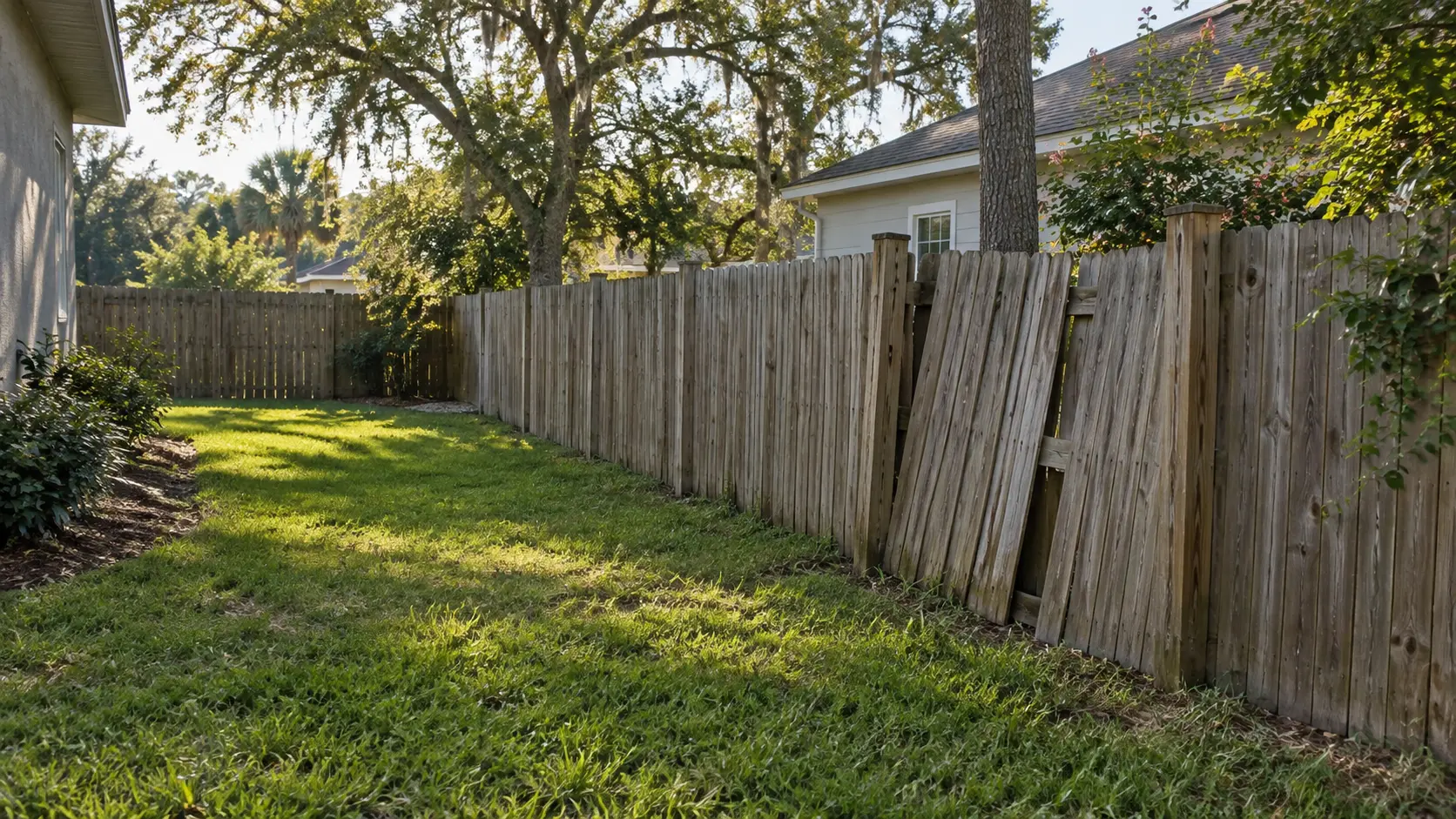
Jacksonville Fence Repair
Fence Repair in Jacksonville, FL
Need fence repair in Jacksonville? Get help with leaning posts, damaged panels, broken rails, loose boards, missing pickets and damaged fence sections involving wood, vinyl, chain-link or aluminum fencing.
One damaged component does not always mean the entire fence needs replacement. Share your ZIP code, fence material, approximate damaged length and photos when possible.
- Fence Posts
- Panels & Sections
- Boards & Rails
- Storm Damage
- Repair vs Replacement
- Residential
- Commercial
Quick Answer
Can a Damaged Fence Be Repaired?
Sometimes. Fence repair may make sense when damage is limited to a post, rail, board, picket, panel or short fence section and the surrounding structure remains usable. Replacement may become more practical when several posts are unstable, long sections have shifted, deterioration is widespread or the same parts keep failing.
Common Repair Needs
Fence Repair Services in Jacksonville
Start with the visible problem, then consider the nearby posts, rails, panels, boards and connections before deciding what needs to be repaired.
Fence Post Repair
Review leaning, loose, damaged or deteriorated supports that may affect nearby sections.
Review post problems →Fence Panel & Section Repair
Assess localized damaged sections before assuming the complete fence must be rebuilt.
Review panel damage →Board, Picket & Rail Repair
Check loose, missing or broken components together with the support structure behind them.
Review boards and rails →Storm & Impact Damage
Look beyond the obvious point of damage for moved posts, rails, gates and adjoining sections.
Review storm damage →Repair vs. Replacement
Compare isolated damage with wider support or material failure before choosing the next step.
Compare the options →Residential & Commercial Repair
Match the repair scope to the property, fence material, access needs and damaged length.
Property repair options →Problem Guide
Common Fence Problems We Assess
The visible symptom helps describe the project, but the nearby support structure often determines whether the problem is truly localized.
| Fence problem | What may be happening | What to review |
|---|---|---|
| Fence is leaning | One or more posts may have moved | Posts, support area and nearby sections |
| Panel is crooked | Support post or connection may have shifted | Panel, rails and posts |
| Boards are loose | Fasteners, rails or boards may be damaged | Boards and supporting rails |
| Rail is broken | Impact, deterioration or wider movement | Rail and adjoining posts |
| Pickets are missing | Localized damage or failed attachment | Pickets and connections |
| Fence is sagging | Support or alignment problem | Posts, rails and panels |
| Gate will not close | Gate or support-post movement | Hinges, frame, latch and posts |
| Long section is down | Wider structural or impact damage | Multiple posts and fence sections |
These examples help describe the problem but do not guarantee the cause.
Support Problems
Fence Post Repair in Jacksonville
Fence posts support the rest of the fence system. When one post moves, nearby rails, panels or gates may also move.
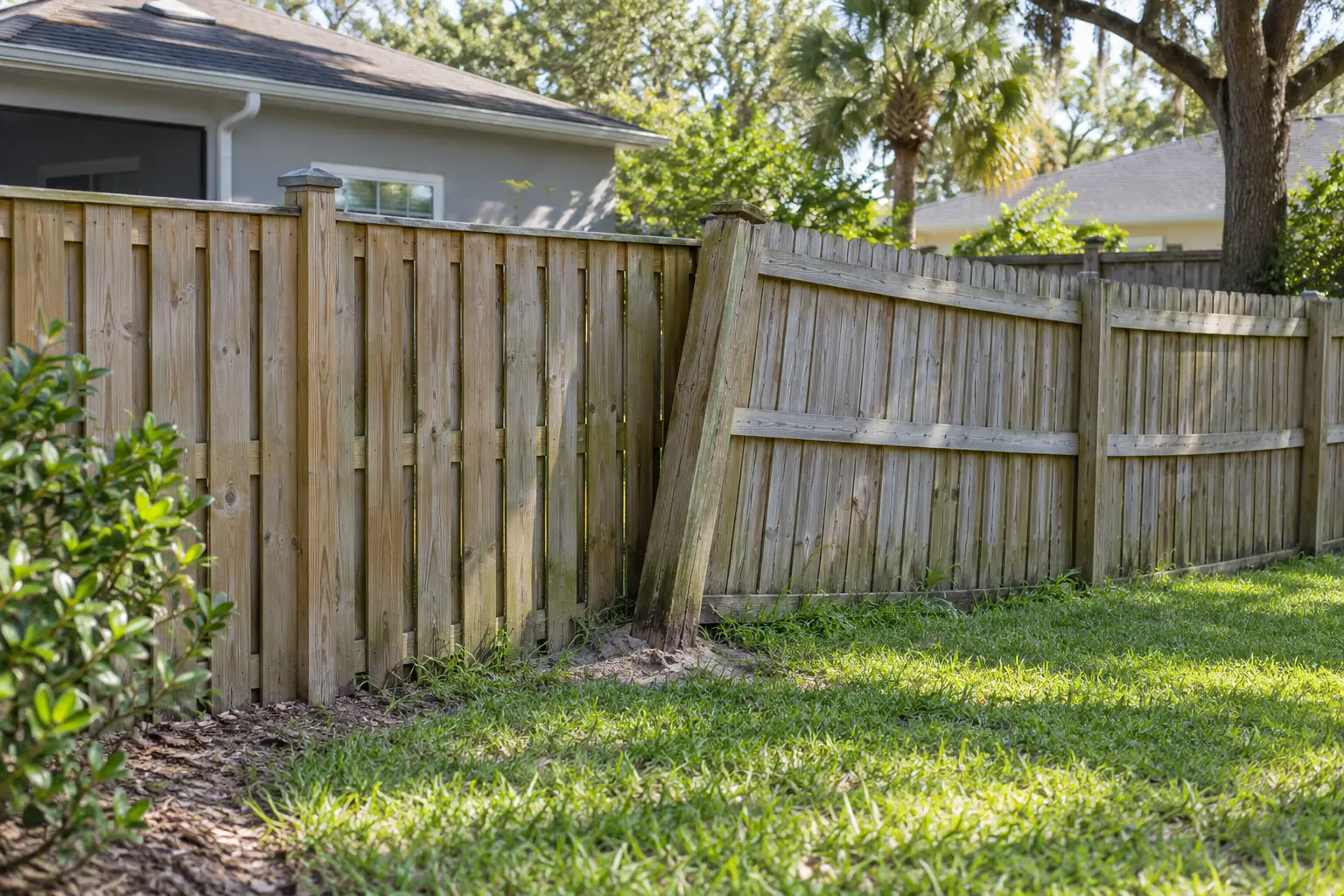
One Leaning Post
A single leaning post may indicate a localized problem. Possible factors include ground movement, impact, moisture around the support area, root pressure, deterioration or movement of attached fence sections.
Several Leaning Posts
Several leaning posts are more likely to indicate a wider fence-line problem. Straightening one visible section may not solve repeated movement farther along the fence.
Send a Wider Photo
For post problems, include a wider photo showing the leaning post, adjoining sections and ground line—not only a close-up of the post.
Localized Damage
Fence Panel, Board and Rail Repair
Damage above ground can sometimes be repaired without replacing the whole fence, but the nearby supports should remain stable enough for a focused repair to make sense.
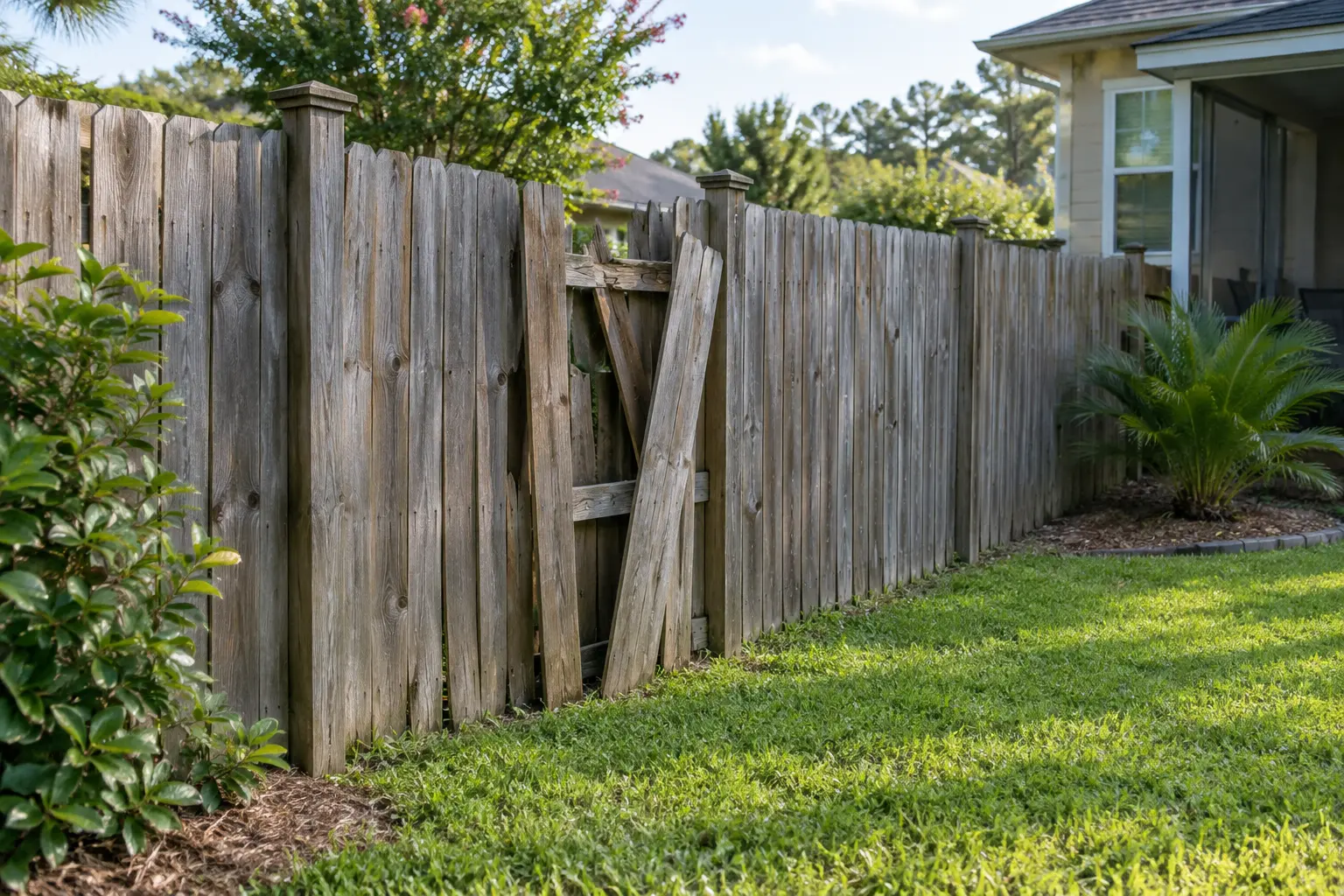
Damaged Fence Panels
One damaged panel may be a localized repair when adjoining posts remain stable, nearby sections are aligned and compatible replacement material is available. If several panels tilt or distort together, the support structure should also be considered.
Broken or Loose Boards and Pickets
Boards and pickets can loosen, split, deteriorate or become damaged by impact. In some cases the visible board is the main problem; in others the supporting rail has also failed.
Broken Fence Rails
A broken rail can affect the alignment of boards, pickets or panels, so the surrounding section should be checked before treating it as an isolated cosmetic issue.
Wind, Limbs & Impact
Storm and Impact Fence Damage
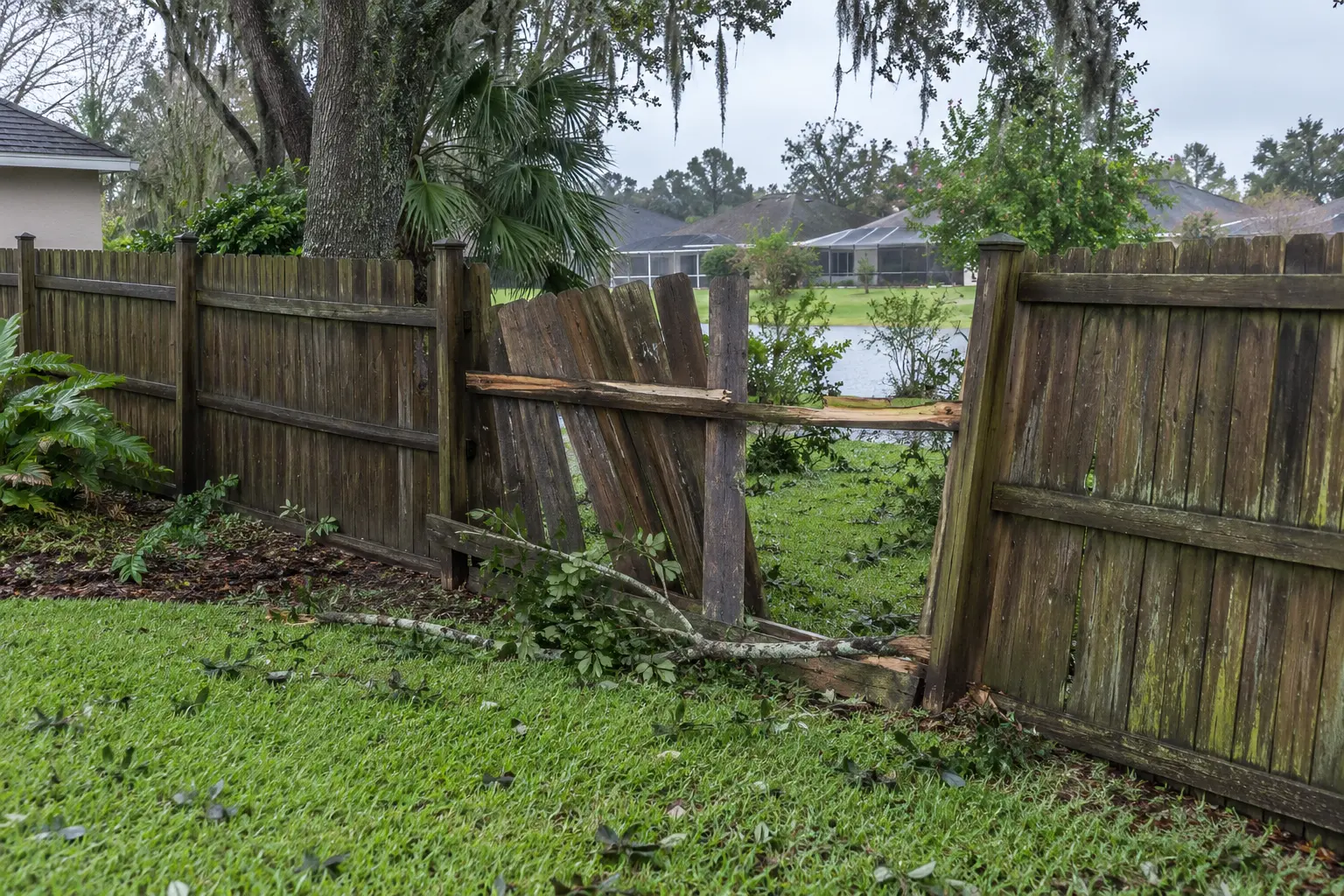
Fence damage can happen after strong wind, heavy rain, falling branches, vehicle contact, landscaping work or other impacts. The most obvious damaged section may not show the full problem.
An impact can damage one panel while also moving a nearby post or changing gate alignment. Look for leaning or rotated posts, separated rails, loose boards or pickets, bent panels, sagging mesh, new gaps, gate movement and sections pulling away from adjoining fencing.
A fallen or unstable section may deserve faster attention where it leaves an opening around pets, children, a pool area or property access. Availability and timing should be confirmed for the specific repair request.
Fence Section Down or Unstable?
If part of the fence has fallen, shifted badly or left a large opening, call and describe what happened.
Repair or Replacement?
Repair or Replace Your Fence?
One Damaged Area Does Not Automatically Mean You Need a New Fence
The key question is whether the problem is localized and repairable or whether several parts of the fence have failed together.
| Condition | Repair may make sense | Replacement may make more sense |
|---|---|---|
| One leaning post | Damage is isolated | Several supports are unstable |
| Broken boards or pickets | Small number affected | Large areas are deteriorated |
| One damaged panel | Nearby structure remains stable | Multiple sections have failed |
| Broken rail | One rail is affected | Framework has widespread damage |
| Impact damage | Damage is localized | Long sections have shifted or fallen |
| Rot or deterioration | Limited to replaceable parts | Posts and rails are widely affected |
| Previous repairs | First major problem | Same areas repeatedly fail |
| Property needs | Existing fence still suits the property | Height, layout or material no longer works |
Not Sure Whether Repair or Replacement Makes More Sense?
Send photos showing both the damaged area and the surrounding fence. Nearby posts, rails and sections help show whether the problem appears isolated or affects a larger part of the fence.
Repair by Material
Fence Repair by Material
Different materials can fail in different ways. Use the material-specific guidance below to narrow the likely repair scope.
Wood Fence Repair
Broken or missing boards, damaged rails, leaning posts, deteriorated sections and panels that have moved out of alignment.
View wood fence service →Vinyl Fence Repair
Cracked or displaced panels, rails, posts and sections where compatible replacement components may be needed.
Chain-Link Fence Repair
Sagging fabric, bent top rails, leaning posts, damaged fittings and localized mesh damage.
View chain-link fence service →Aluminum Fence Repair
Bent panels, loose rails, damaged pickets, leaning posts and alignment problems around fence sections or gates.
View aluminum fence service →Gate Problems
Is the Problem Mainly With the Gate?
Gate problems should be separated from general fence damage when the main issue involves the moving part of the opening. Common signs include sagging, dragging, latch problems, loose hinges, support-post movement, a bent frame or a larger gap than before.
Sometimes the gate itself is damaged. In other cases, the support post or adjoining fence has moved.
Different Properties
Residential and Commercial Fence Repair
Residential Fence Repair
Residential projects may involve backyard boundaries, side-yard fencing, pet areas, privacy fences, pool-adjacent fencing or front-yard sections. The right approach depends on the fence material and how much of the structure has been affected.
Replacing a few damaged wood boards is different from resetting several leaning posts. Likewise, one damaged vinyl panel is different from a long section that has shifted.
Commercial Fence Repair
Commercial damage can involve longer fence runs, access areas, vehicle impacts, larger gates or sections around equipment and service spaces. The first goal is still to determine whether damage is isolated or affects the wider fence system.
Include the property type, approximate affected length, fence material and gate involvement when relevant.
Jacksonville Repair Planning
Local Conditions and Larger Repair Projects
Fence movement and damage can follow heavy rain, wind, falling limbs, moisture, root growth, ground movement or accidental impact. Different fence materials respond differently, so repair should focus on the components that actually failed.
When Repair Turns Into Reconstruction
A small repair may involve a board, rail, panel or post. If several posts must be reset, a long run has shifted or the fence line needs to change, property boundaries and fence-placement requirements can become relevant again.
Jacksonville’s zoning guidance says an existing fence, sidewalk or curb should not be assumed to mark the legal property line; a survey is needed to determine the boundary accurately. The city’s general residential guidance also describes a four-foot maximum within the front-yard setback and up to eight feet farther toward the rear, subject to property-specific requirements.
Four Clear Steps
How the Fence Repair Process Works
A clear description and useful photos help separate a localized component problem from section replacement, post work, gate service or broader replacement.
Describe the Problem
Explain what you can see: leaning posts, broken panels, missing boards, damaged rails, storm damage, impact damage or another problem.
Share Fence Details
Include the Jacksonville-area ZIP code, fence material, approximate damaged length and whether a gate is involved.
Send Useful Photos
Include one wider photo of the damaged fence plus close-ups. For leaning sections, show posts and the ground line when possible.
Determine the Repair Scope
The next step can focus on a component repair, section replacement, post work, gate-related service or broader replacement.
Project Variables
What Affects Fence Repair Cost?
Fence repair does not have one standard price because the work depends on what failed. Common cost factors include:
- Fence material and damaged length
- Number and condition of posts
- Panels, boards, pickets or rails involved
- Availability of compatible replacement components
- Gate involvement
- Ground conditions and property access
- Existing-fence condition
- Repair versus section replacement
- Need for new post holes
- Removal of damaged material
Better Repair Requests
What to Include With Your Fence Repair Request
Send your Jacksonville-area ZIP code, fence material, approximate damaged length, a close-up photo and at least one wider photo showing the surrounding fence.
If a gate, post or long section has moved, include that in the photos as well. You do not need to diagnose the problem yourself—describe what you can see.
Common Questions
Fence Repair FAQs
Use these answers to understand common repair decisions and prepare a clearer service request.
Can one section of a fence be repaired?
Often, yes. A localized section may be repairable when nearby posts, rails and panels remain stable. Wider damage may require more extensive work.
Can a leaning fence be repaired?
Sometimes. The first step is identifying whether one post has moved or several supports are unstable. Several leaning sections can indicate a broader problem.
Do broken fence posts always need replacement?
Not every post problem is identical. The post condition, support area and attached fence sections should be considered before determining the repair scope.
Can individual fence panels be replaced?
Potentially. A single panel or section may sometimes be replaced if the surrounding structure remains suitable and compatible material is available.
Should I repair or replace an old fence?
Repair may make sense when damage is isolated and the rest of the fence remains usable. Replacement may be more practical when deterioration is widespread, several supports have failed or repeated repairs no longer solve the problem.
Can storm-damaged fencing be repaired?
Localized storm or impact damage may sometimes be repaired. If several posts, rails or fence sections have shifted, broader repair or replacement may be needed.
Can different fence materials be repaired?
Repair requests may involve wood, vinyl, chain-link and aluminum fencing. The possible repair depends on the material, damaged components and availability of suitable replacement parts.
What photos should I send for fence repair?
Send close-up photos of the damage and at least one wider photo showing nearby posts and fence sections. Include gate photos when the gate is involved.
Do I need to contact 811 for fence repair?
Not for every repair. If the work requires digging new post holes or moving posts, Sunshine 811 says notification is required before digging.
How much does fence repair cost in Jacksonville?
Cost depends on the fence material, damaged area, post condition, replacement components, access and whether repair or section replacement is needed. A project-specific scope is more useful than a generic price.
Related Fence Services
Continue With the Right Fence Service
Use the material or gate page when the problem is more specific than general fence repair.
Start With the Damage
Request Fence Repair in Jacksonville, FL
Have a leaning post, broken panel, loose boards, damaged rails or a fence section that shifted after wind or impact? Share your Jacksonville-area ZIP code, fence material, approximate affected length and photos showing both the damage and nearby fence.