
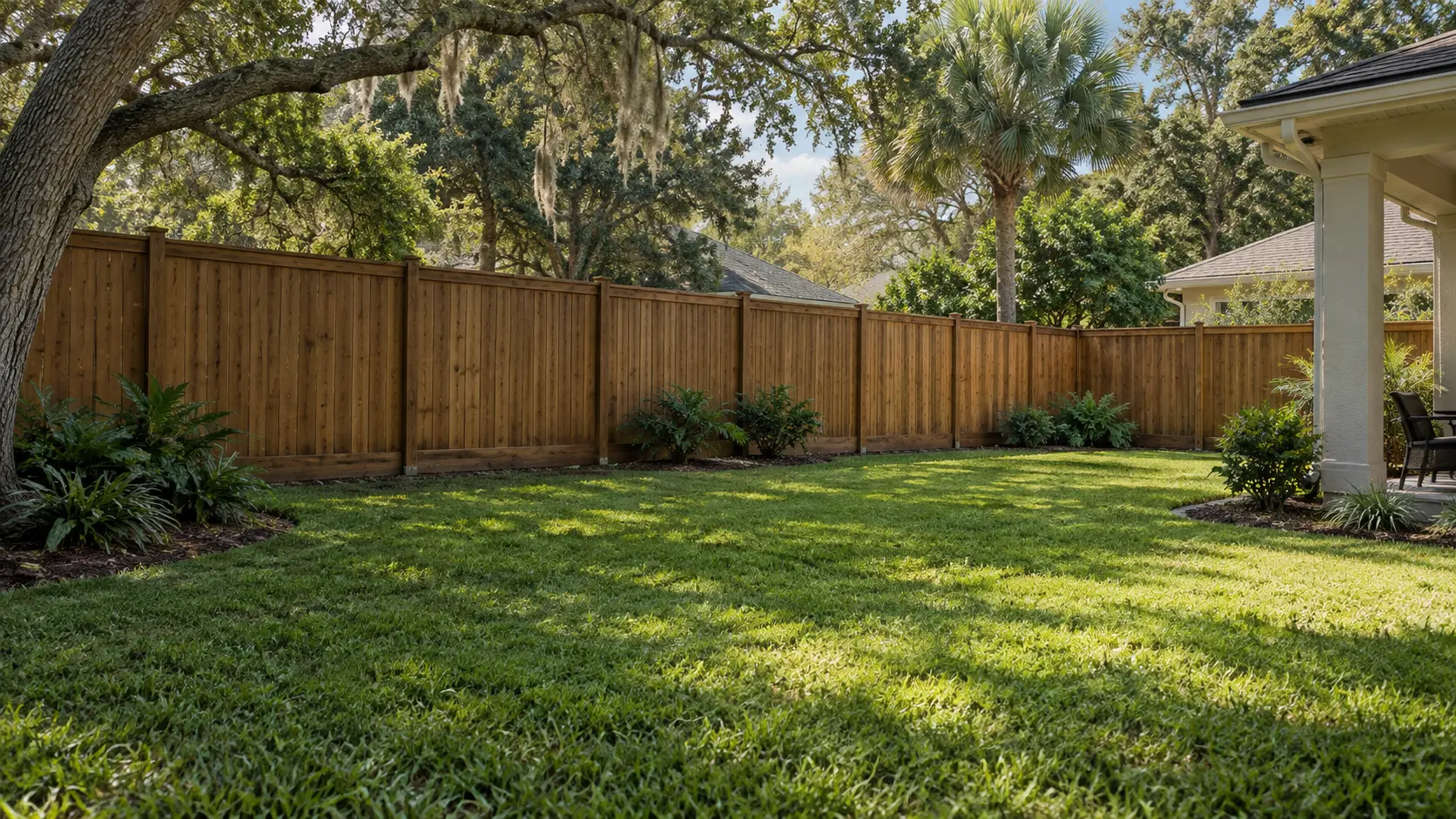
Jacksonville Wood Fence Finishing
Fence Staining & Painting in Jacksonville, FL
Have a wood fence that looks faded, gray, uneven or ready for a fresh finish? The right starting point depends on the wood condition, previous coating, surface preparation and whether structural repairs are needed first.
You do not need to know the exact stain, paint color or product before getting started. Share the fence condition, approximate size and photos when useful.
- Wood Fences
- Staining
- Painting
- Weathered Wood
- Existing Finishes
- Prep + Finish
Quick Answer
Should You Stain or Paint a Wood Fence?
Stain and paint create different types of finishes. Stain can allow more of the natural wood character to remain visible, depending on how much pigment the finish contains. Paint creates an opaque color layer and may make sense when solid coverage is the goal or when a fence already has a sound painted finish.
The better choice depends on the existing surface, wood condition, desired appearance and future maintenance expectations.
Start With the Existing Surface
Stain or Paint? Start With the Existing Fence
The finish that looks best in a photo is not always the right starting point for the fence you already have.
| Fence condition or goal | Good starting point |
|---|---|
| Bare wood and natural grain should remain visible | Consider stain |
| Fence was previously stained | Evaluate for restaining |
| Existing paint is sound | Repainting may be practical |
| Solid opaque color is the goal | Consider paint or another suitable solid finish |
| Old coating is peeling | Surface preparation is important first |
| Wood has turned gray from weather exposure | Evaluate wood condition and preparation needs |
| Boards, rails or posts are damaged | Address repair before finishing |
Not sure whether your fence is painted, stained or bare? Send a few clear photos and describe its current condition.
Surface Readiness
Is Your Fence Ready for Staining or Painting?
A finish performs best when the fence itself and the surface are ready for it.
The Fence Should Be Structurally Sound
Staining or painting should not be treated as a repair for broken boards, loose rails, leaning sections, failed posts or damaged gates.
The Surface Should Be Clean
Dirt, loose material and surface buildup can interfere with how a new finish bonds or penetrates. Preparation varies by surface condition.
The Wood Needs to Be Ready for the Selected Finish
A new fence should not be stained simply because a fixed number of days has passed. Wood condition, moisture and the selected finish requirements matter.
Previous Finishes Should Be Identified
Bare wood, stained wood and painted wood should not automatically receive the same preparation.
Loose or Peeling Coating Needs Attention
Applying a new coating over a failing surface can leave the underlying problem in place.
Weather Conditions Matter
Exterior finishes have application and drying requirements. Rain, surface moisture, temperature and drying conditions should be considered.
Finish Is Not Structural Repair
What Fence Staining Cannot Fix
A fresh stain or paint can improve appearance and help protect a suitable wood surface, but it does not correct structural fence problems.
Rotted or Severely Deteriorated Boards
A coating cannot restore wood that has lost too much of its strength.
Failed Fence Posts
Posts that are loose, badly deteriorated or no longer holding the fence correctly are a structural issue.
Leaning Fence Sections
A leaning fence may involve posts, rails, soil conditions or other problems that need separate evaluation.
Loose Rails or Structural Gate Problems
Finishing the surface does not reconnect damaged framing or correct a gate that sags because of structural problems.
If the main problem is physical fence damage, see Fence Repair in Jacksonville before focusing on staining or painting.
Existing Condition Matters
New, Weathered or Previously Finished Fence?
The condition of the fence changes the finishing decision.
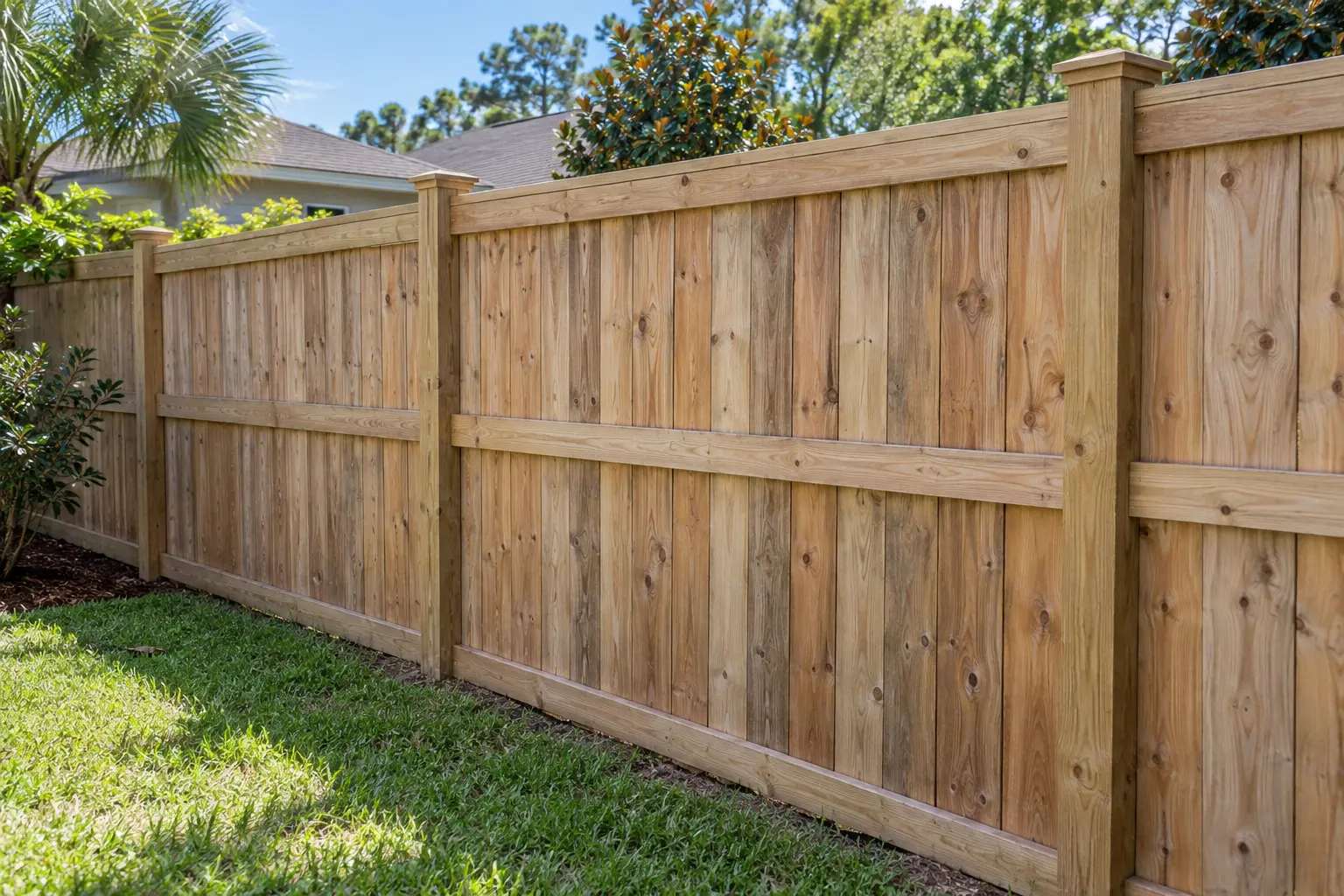
New Wood Fence
New wood should be ready for the selected finish rather than simply reaching a certain age. Wood condition, moisture, exposure and finish instructions matter more than one fixed waiting period.
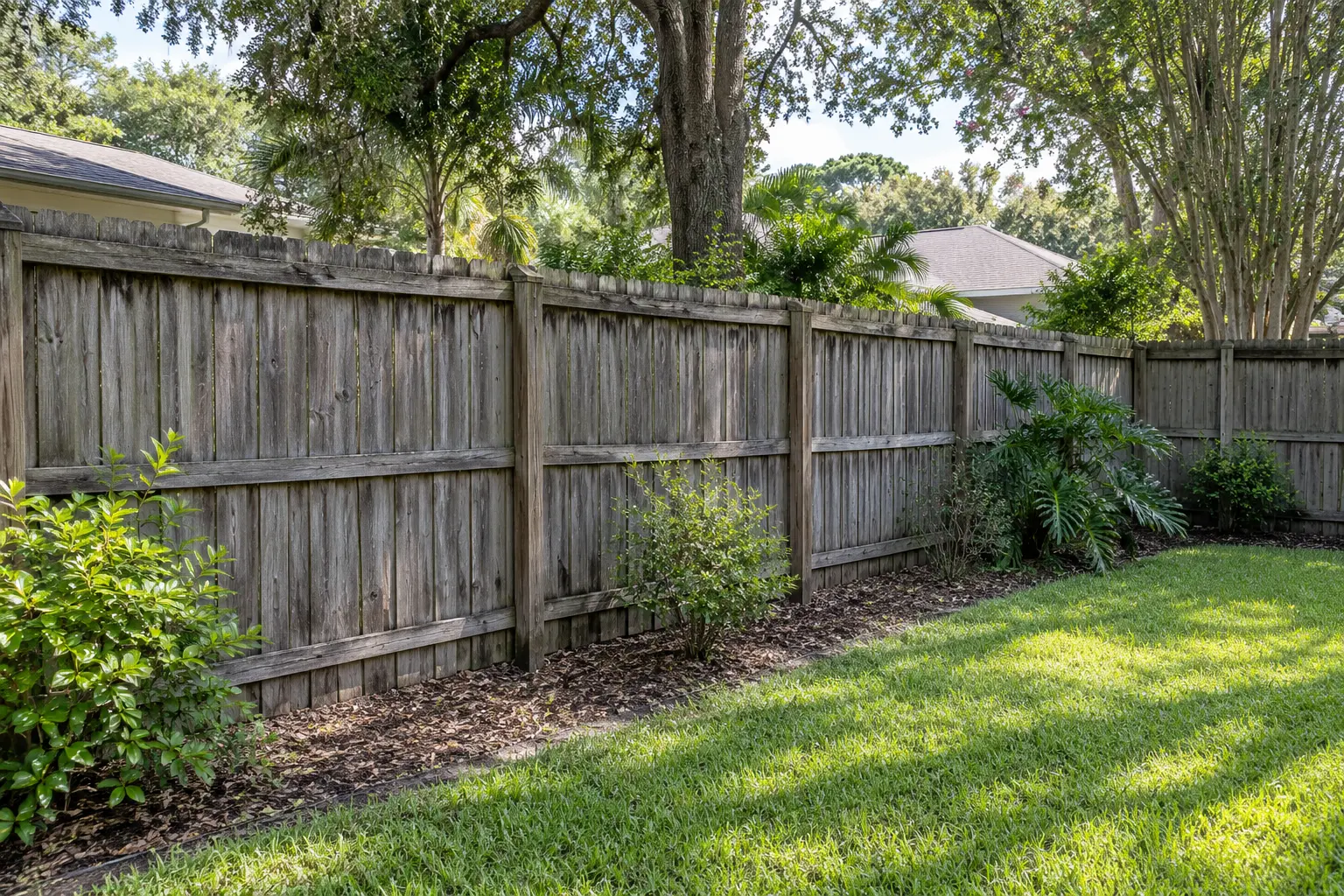
Weathered Gray Wood
Gray appearance alone does not mean the fence is structurally damaged. The surface may need preparation before a new stain or coating is applied.
Previously Stained Fence
A previously stained fence may be a candidate for another stain, but the condition and type of remaining finish should be considered first.
Previously Painted Fence
If a solid paint film remains, a penetrating stain cannot simply pass through it and perform as it would on exposed wood. Changing finish systems may require substantially more preparation.
Surface Preparation
Preparation Depends on the Existing Fence
Not every fence needs the exact same preparation. The condition of the wood and the existing coating should guide the work.
Surface Assessment
Determine whether the wood appears sound and whether the fence is bare, stained, painted or covered by a failing older finish.
Cleaning
Depending on condition, preparation may include removing dirt and surface contamination before finishing.
Loose-Finish Preparation
Peeling, flaking or poorly bonded material may need attention before a new finish is applied.
Drying and Localized Preparation
The wood should meet the selected finish requirements before coating. Some areas may also need sanding or other localized preparation.
Jacksonville Exposure
Why Jacksonville Exposure Matters for Wood Fence Finishes
Jacksonville’s warm conditions, regular rainfall and year-round outdoor exposure can affect wood fence surfaces and finishes over time. Different sections of the same fence may also experience different conditions.
Sun Exposure
Sunlight contributes to exterior wood weathering and can affect how both unfinished wood and existing finishes age.
Rain and Moisture
Exterior wood repeatedly moves through wet and dry conditions. The finish, wood condition and ability of the surface to dry should be considered together.
Shade and Vegetation
Dense shrubs, vines and heavily shaded areas can create different drying conditions from open fence sections.
USDA Wood Fence Guidance
Technical background on protecting and finishing exterior wood fences.
USDA Exterior Wood Finishing
Technical background on finish selection, wood properties, moisture, sunlight and weathering.
Jacksonville Climate Normals
Local temperature and rainfall normals provide useful context for year-round exterior exposure.
Appearance
Choose the Look You Want From the Fence
The desired appearance can help narrow the finishing options once the condition of the surface is understood.
More Natural Wood Appearance
A penetrating or semi-transparent stain can allow more of the wood’s visible character to remain part of the finished look.
More Color With Some Wood Character
More heavily pigmented stain options can provide stronger color while still allowing some wood appearance to remain.
Solid Color Appearance
Paint or another suitable opaque finish can provide more complete color coverage, especially where an existing painted surface is suitable for recoating.
Match Appearance to the Existing Surface
The finish should be chosen based on both the desired look and what is already on the fence.
Scope
One Side or Both Sides of the Fence?
The amount of accessible fence surface can affect project scope.
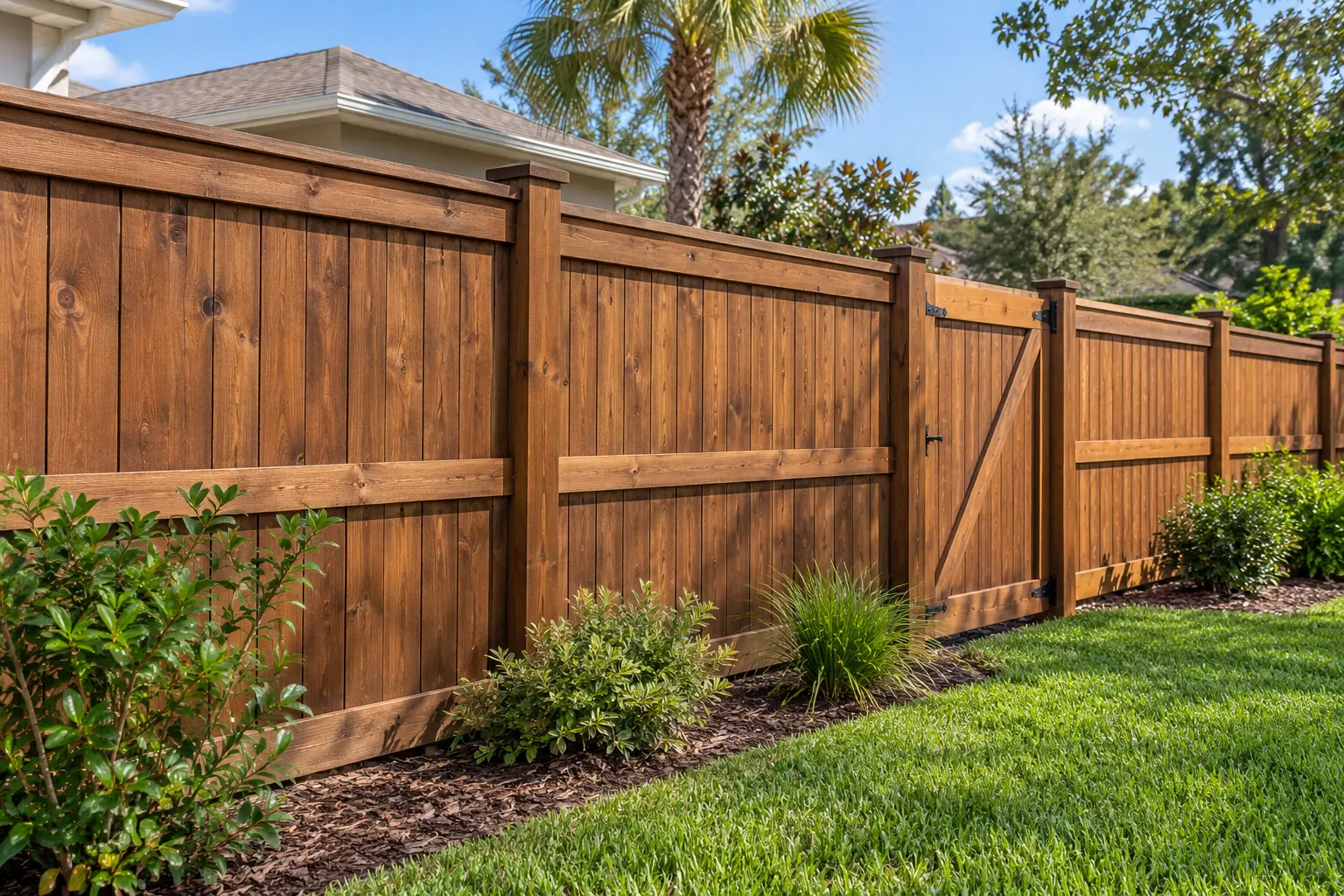
A project may involve one visible side, both accessible sides, gates, posts, rails or other detailed areas. Fence ownership, neighboring property access and the physical fence design can affect which surfaces are reachable. Do not assume access to the opposite side of a boundary fence without confirming the property situation first.
Repair vs Finish
Repair First or Finish First?
A faded fence and a damaged fence are not the same problem.
| Fence condition | Better starting point |
|---|---|
| Fence is structurally sound but faded | Finish evaluation |
| Surface is gray or weathered | Preparation + finish evaluation |
| Previous coating is peeling | Surface-preparation evaluation |
| Boards are broken | Fence Repair |
| Fence is leaning | Fence Repair |
| Posts have failed | Fence Repair |
| Fence is no longer practical to restore | Compare removal and replacement |
Project Scope
What Affects Fence Staining or Painting Cost?
Fence finishing does not have one useful price without knowing the existing surface and project scope.
| Cost factor | Why it matters |
|---|---|
| Fence length | More fence means more surface to prepare and finish. |
| Fence height | Taller sections increase total finishing area. |
| Fence style | Pickets, rails, gaps and details change surface area. |
| One side or both sides | Accessible finishing area affects scope. |
| Existing coating | Bare, stained and painted fences may require different preparation. |
| Surface condition | Weathering or peeling can increase preparation. |
| Repairs | Structural repair should be addressed separately from finishing. |
| Gates | Gates add faces, edges and detailed areas. |
| Access | Dense vegetation or tight spaces can affect working access. |
| Finish system | Different finishes can have different preparation and application requirements. |
A project-specific scope is more useful than relying on a generic per-foot figure.
Helpful Details
What to Include With Your Fence Finish Request
- Jacksonville-area ZIP code
- Approximate fence length and height if known
- Whether the wood is new or older
- Whether the fence is bare, stained or painted
- Whether one or both accessible sides are involved
- Peeling, fading or gray weathering
- Any broken boards, leaning sections or post problems
- Gates included in the fence
- Clear overall and close-up photos
No Product Knowledge Required
Start With the Fence Condition
You do not need to know the exact stain brand, paint type or color before making contact. Photos are especially useful when you are unsure whether the existing coating is stain or paint.
Describe what the fence looks like now and what you want to change.
Related Fence Services
Continue With the Service That Fits the Fence
Use the dedicated service page when the main need is wood-fence work, structural repair, new installation or removal rather than surface finishing.
Common Questions
Fence Staining & Painting FAQs
These answers cover the main decisions before a wood fence is stained, painted or refinished.
Is it better to stain or paint a wood fence?
It depends on the existing surface and the appearance you want. Stain can preserve more visible wood character, while paint provides opaque color coverage. A fence that is already painted may also be more practical to repaint than to completely prepare for a penetrating stain.
Can a weathered gray fence be stained?
Potentially. Gray weathering does not automatically mean the fence cannot be stained, but the wood condition and surface preparation should be evaluated first.
Can you stain over fence paint?
A penetrating stain generally cannot penetrate through an intact paint film in the same way it can penetrate bare wood. Changing from paint to stain may require significant surface preparation.
When is a new wood fence ready for stain?
There is no single waiting period that applies to every new fence. Wood condition, moisture level, weather exposure and the selected finish’s application requirements should be considered.
Does a fence need to be cleaned before staining or painting?
Surface condition matters. Dirt, loose material or other contamination may need to be addressed before a new finish is applied.
Can staining fix rotted or damaged wood?
No. A finish can improve or protect a suitable surface, but it does not restore structurally failed boards, rails or posts. Repair should be addressed separately.
What affects fence staining cost?
Fence length, height, style, accessible sides, previous coatings, surface condition, preparation, gates and access conditions can all affect project scope.
How do Jacksonville weather conditions affect fence finishes?
Rain, outdoor exposure, sunlight, shade and drying conditions can cause different areas of a wood fence to weather at different rates. Surface condition and exposure should therefore be considered when planning a finish.
Start With the Existing Fence
Request Fence Staining or Painting in Jacksonville, FL
Have a wood fence that looks faded, weathered, gray or ready for a different finish? Share your Jacksonville-area ZIP code, approximate fence size, whether the fence is new or older, any existing stain or paint, visible surface problems and photos when available.
If the fence also has broken boards, leaning sections or failed posts, mention those issues so finishing and repair needs can be separated correctly.