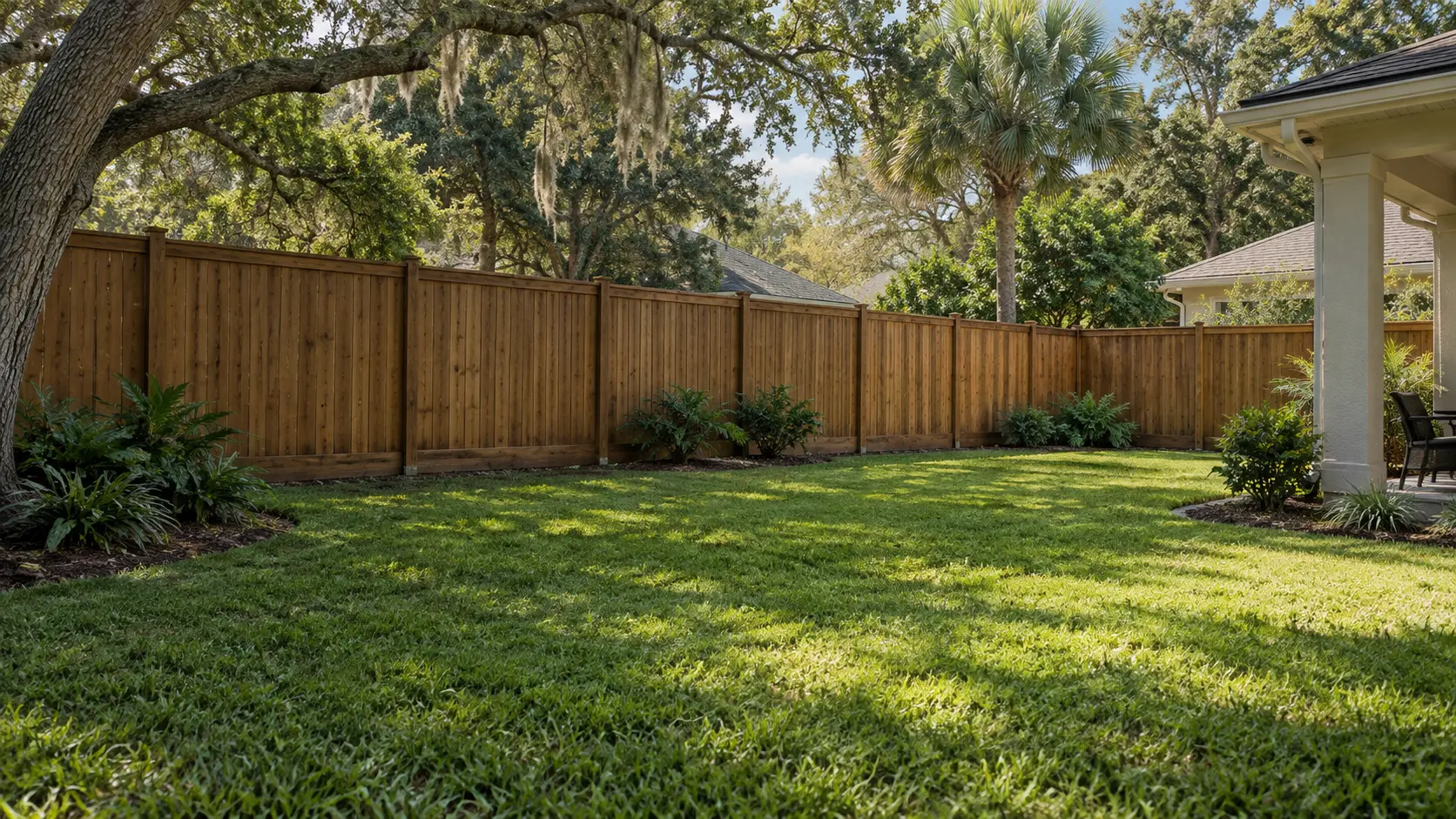
Backyard Privacy & Screening
Privacy Fence Installation in Jacksonville, FL
Want more separation from neighboring yards, streets or outdoor activity? Plan the privacy fence around the view you want to block, where privacy matters most and how the property is actually used.
Wood and vinyl are common options, but sightlines, height, gates, slopes and property conditions shape the final layout.
- Backyard Privacy
- Wood Privacy
- Vinyl Privacy
- Full Screening
- Semi-Private Options
- Gates
Quick Answer
What Type of Fence Provides the Most Privacy?
Solid wood and solid vinyl can provide strong ground-level screening when the height, location and property conditions support it. Wood offers more style flexibility, while vinyl provides a uniform panel system without normal wood staining.
Semi-private layouts keep more openness. The right choice depends on the sightline, allowed location, maintenance preference and property layout.
Start With the Sightline
What Are You Trying to Block From View?
Privacy can vary by boundary. Start with the actual view that is causing the problem.
Neighboring Yard
A solid section can reduce direct ground-level views between adjoining yards. Confirm the boundary first.
Street or Sidewalk
Front-yard and corner-lot rules can limit the height or location of street-facing privacy fencing.
Patio or Seating Area
Targeted screening may solve the main sightline without enclosing the whole yard.
Side Yard
Side-yard privacy should work with gates and routine access for people or equipment.
Rear Property Line
Rear boundaries often suit stronger screening, subject to the actual boundary, zoning and grade.
Elevated Neighboring Views
Standard privacy fencing mainly screens ground-level sightlines, not every elevated view.
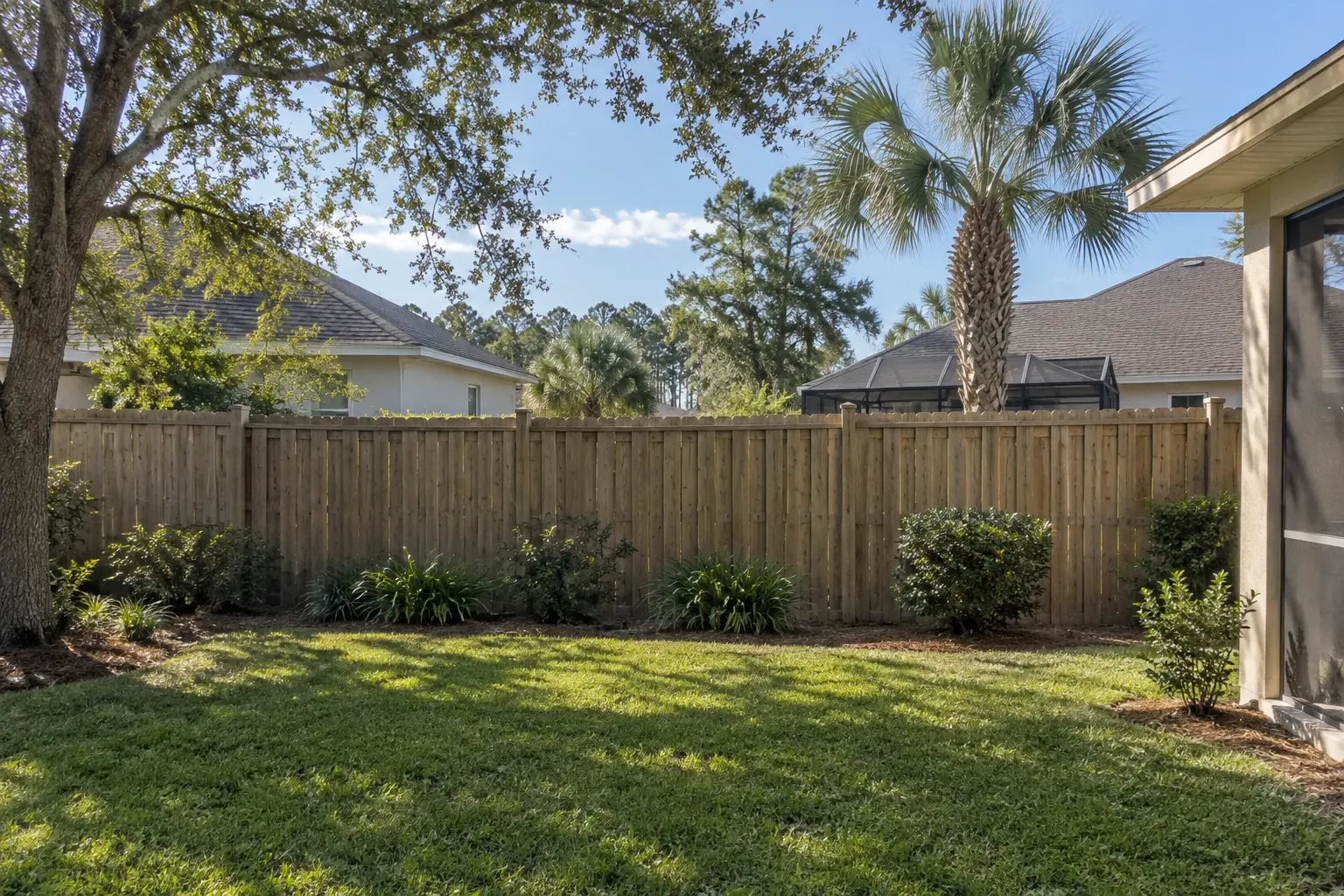
Privacy Level
Full Privacy or Semi-Private?
Different layouts provide different levels of visual screening. More solid does not automatically mean better for every boundary.
| Privacy layout | What it is designed to do |
|---|---|
| Solid privacy | Block most direct ground-level views. |
| Board-on-board | Use overlapping boards to reduce visible gaps. |
| Stockade or close-board | Provide straightforward solid screening. |
| Shadowbox | Reduce direct views while keeping a more open feel. |
| Solid vinyl panels | Provide a uniform screening surface. |
| Chain link with privacy slats | Add screening while remaining different from a solid fence. |
| Mixed privacy/open layout | Use stronger screening only where it is actually needed. |
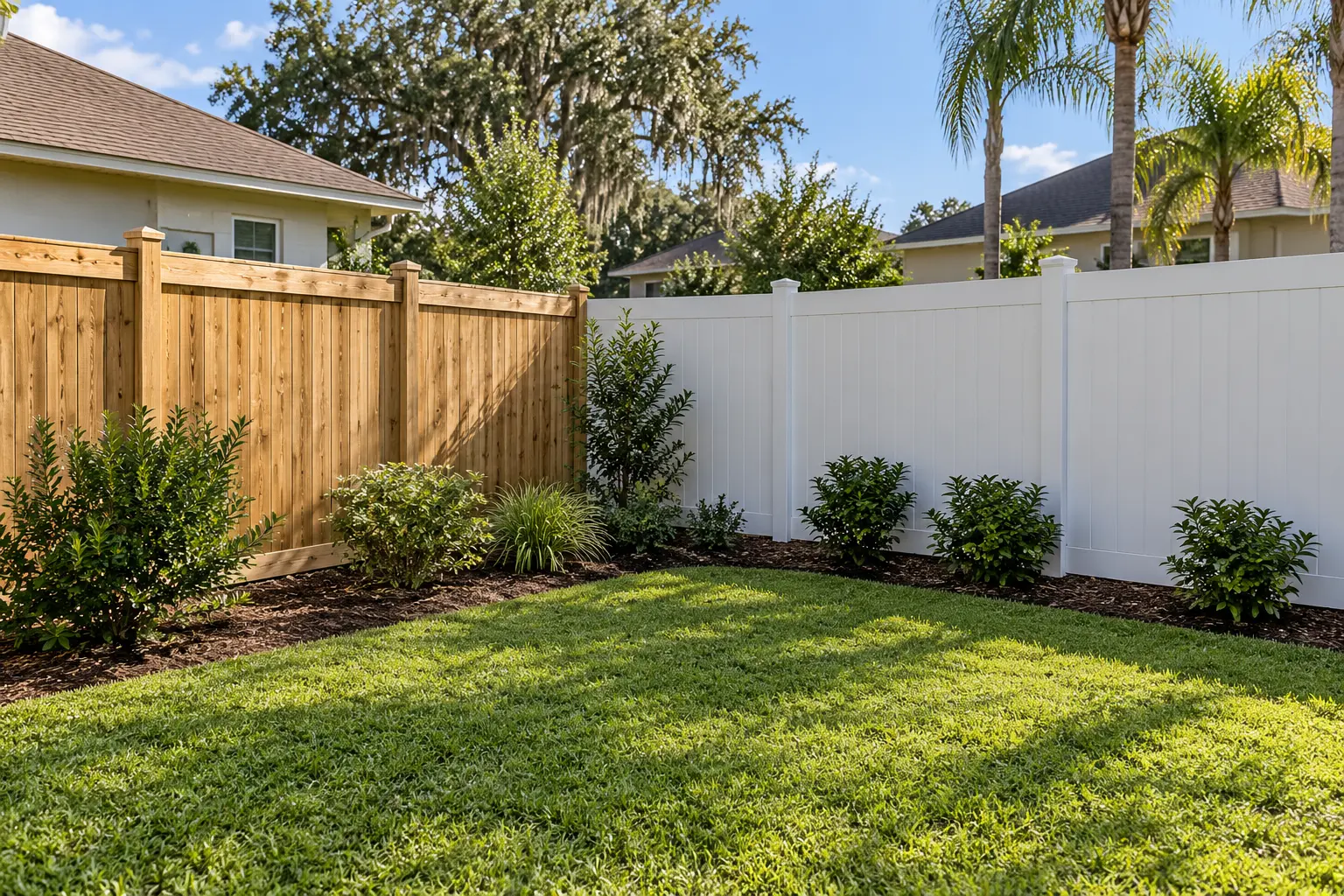
Material Comparison
Wood Privacy Fence or Vinyl Privacy Fence?
Both can provide strong backyard privacy. Compare appearance, layout flexibility, maintenance and property conditions.
| Consideration | Wood privacy fence | Vinyl privacy fence |
|---|---|---|
| Visual screening | Strong with close-board designs | Strong with solid panels |
| Appearance | Natural and flexible | Uniform and consistent |
| Layout flexibility | High | More dependent on panel dimensions |
| Finish maintenance | May require staining or painting depending on finish | Does not need normal wood staining |
| More information | Wood Fence page | Vinyl Fence page |
Style & Screening
Privacy Fence Styles to Consider
Style affects both appearance and how much of a direct sightline is screened.
Board-on-Board
Overlapping boards reduce visible gaps and strengthen visual separation.
Stockade or Close-Board
A straightforward solid layout for visual separation.
Shadowbox
Alternating boards reduce direct views while keeping more openness.
Solid Vinyl Panels
Uniform screening that should be planned with gates and grade changes.
Horizontal Privacy
A contemporary look that can need extra planning around slopes, transitions and historic rules.
Mixed Privacy Layout
Use solid screening only where it is needed.
Use Privacy Where It Matters
The Whole Yard Does Not Need the Same Privacy Level
Privacy can be planned by area instead of using the same solid fence around every boundary.
| Area | Possible approach |
|---|---|
| Rear boundary | Stronger full privacy where direct neighboring views are greatest. |
| Side yard | Privacy combined with a practical gate or equipment access. |
| Front-facing area | A more open design where local height or visibility requirements apply. |
| Patio or seating area | Targeted privacy screening without enclosing the full yard. |
| Preferred landscape view | Keep the sightline more open. |
| Neighbor-facing section | Focus screening where direct views are strongest. |
Planning Sequence
How to Plan a Privacy Fence
Plan the sightline and property conditions before choosing a material.
Identify the Sightline
Stand where you want more privacy and identify exactly what needs to be screened.
Confirm the Fence Area
Check the boundary, existing fence, slopes, gates, easements and any front-yard or corner-lot conditions.
Choose the Privacy Level
Decide whether the area needs solid screening, semi-private fencing or only a targeted section.
Compare Materials and Access
Compare wood and vinyl, then plan gates and transitions around how the yard is used.
Jacksonville Planning
Privacy Fence Height, Property Lines and Site Conditions
Jacksonville height, boundary, corner-lot, easement and utility conditions can affect the final layout.
Fence Height by Location
Jacksonville generally allows up to 4 feet within the required front-yard setback and up to 8 feet farther rearward, subject to zoning and site conditions.
Confirm the Property Line
Existing fences, curbs and sidewalks do not prove the legal boundary. Jacksonville recommends a survey for accurate property-line location.
Corner Lots
Traffic-visibility requirements can affect where taller or more solid fencing is appropriate.
HOA or Deed Restrictions
Private rules can be separate from City zoning. Check applicable height, material, style or color restrictions.
Easements
If the fence crosses a recorded easement, check who controls it and what access obligations apply.
Underground Utilities
Fence posts require digging. Follow Sunshine 811’s locate process before excavation.
Permit or Review Check
Requirements can vary by project and property. Confirm the applicable Jacksonville review or permit requirements before construction.
Privacy + Access
Plan the Privacy Gate With the Fence
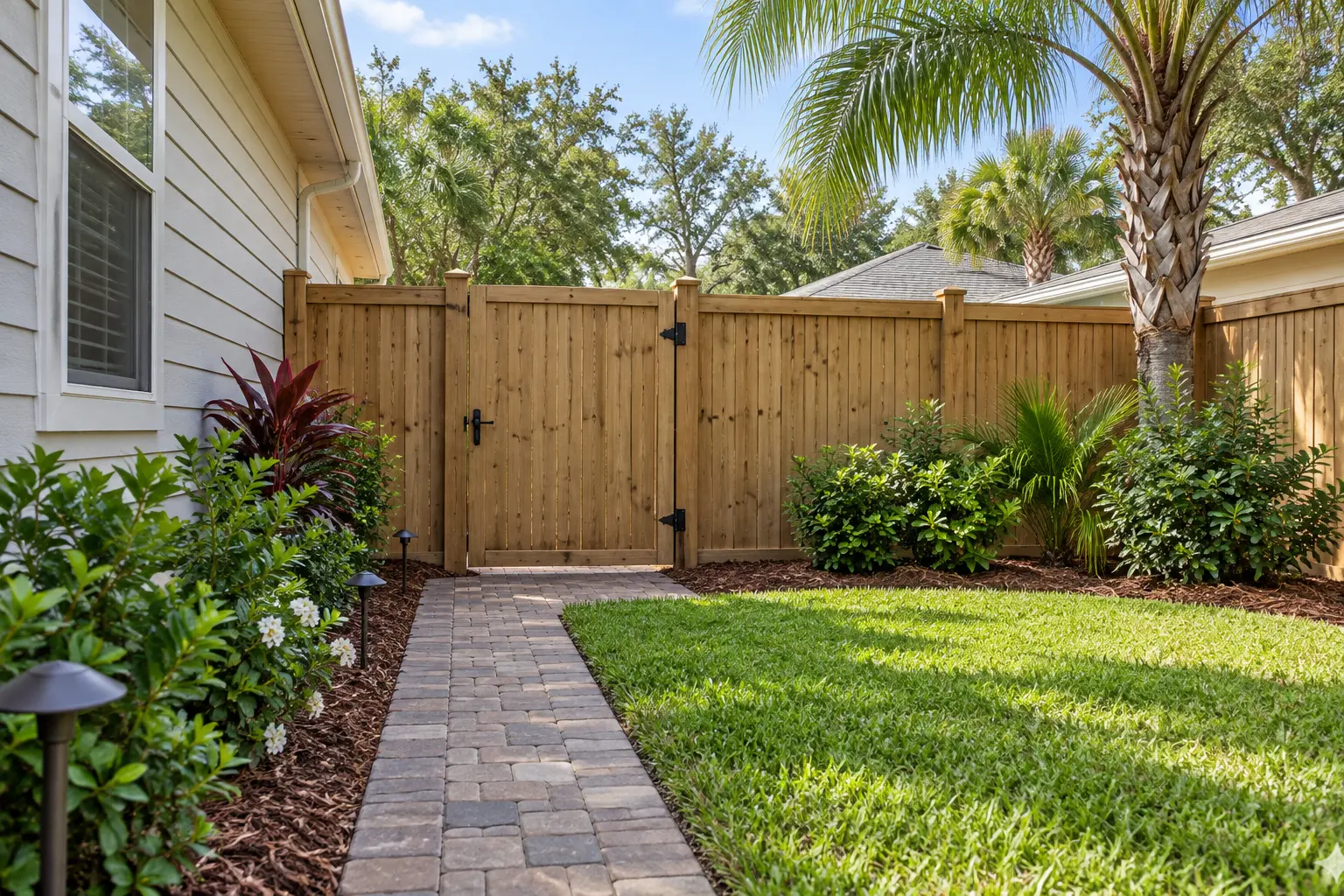
A gate should provide useful access without becoming an afterthought in the privacy layout.
Choose the Gate Location
Place access where it works with normal movement through the yard, landscaping and side-yard conditions.
Consider the Opening Width
Think about whether the opening is for people only or also lawn equipment, bicycles, trash containers or other yard items.
Match the Privacy Level
The gate should work visually with the surrounding fence rather than creating an unnecessary open sightline.
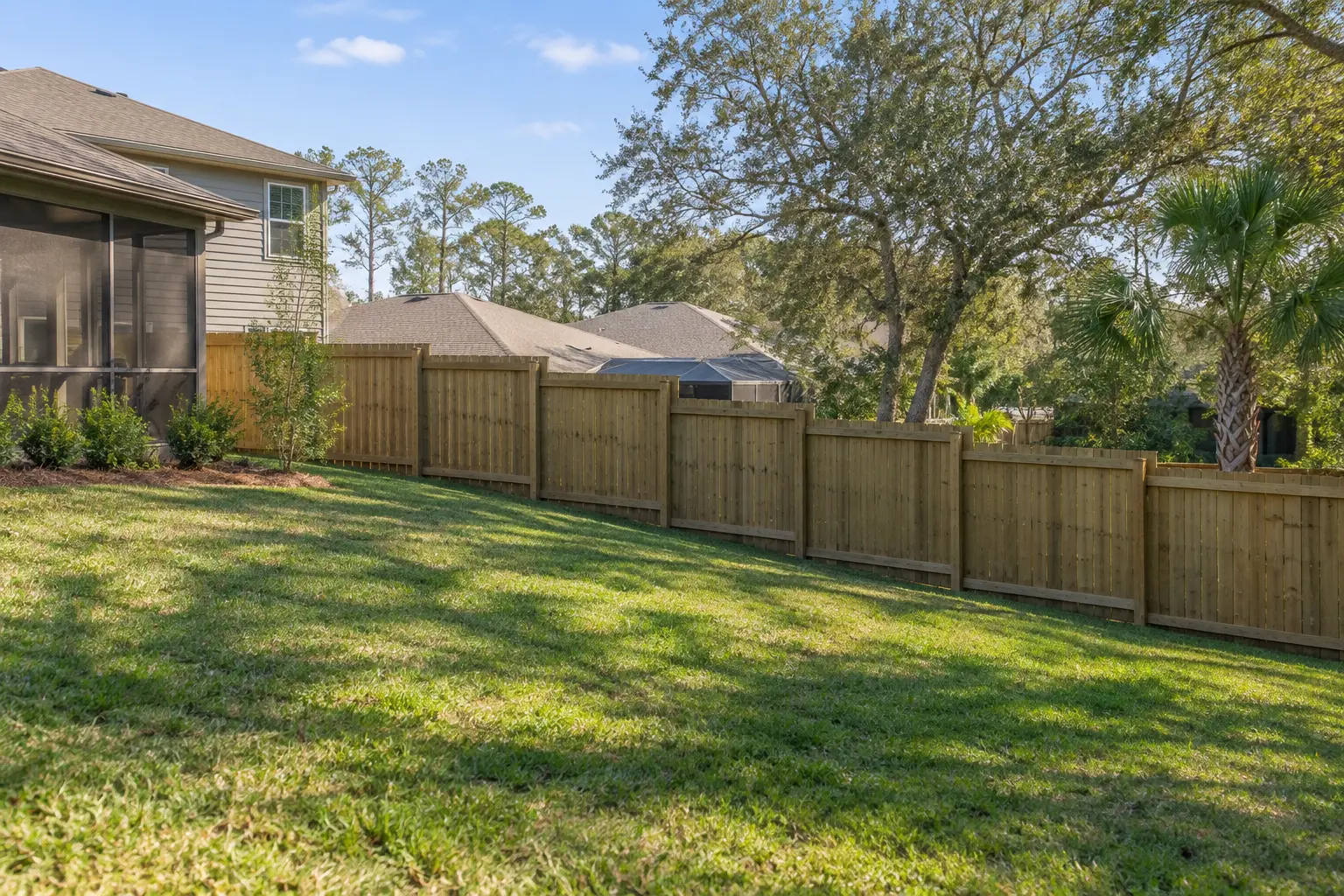
Grade & Sightlines
Slopes Can Change How Private a Fence Feels
A fence can have the planned height but still create uneven sightlines when the property rises or falls. Grade changes can affect panel transitions, gaps near the ground and how neighboring property is viewed from different points in the yard.
Some sites may need stepped sections or another property-specific approach to keep the intended screening useful across the changing grade.
Material Care
Jacksonville Exposure and Privacy Fences
Solid privacy fencing has different exposure and maintenance needs from open-view fencing.
Solid Sections and Wind
Solid fencing interacts with wind differently from open fencing, so height, material, layout and property exposure should be considered together.
Material Maintenance
Wood may need finish maintenance over time, while vinyl avoids normal wood staining. Posts, panels and gates still need routine inspection.
Vegetation and Access
Heavy vegetation can make inspection and maintenance harder. Keep reasonable access around the fence where possible.
Special Property Conditions
Historic Properties and Pool Areas
A few property conditions require separate review before a privacy-fence layout is finalized.
Historic Properties
Locally designated Jacksonville historic-district properties and local landmarks can require Historic Preservation review for fencing. Horizontal designs can face additional restrictions, so check the applicable requirements before finalizing the style.
Pool Areas
A yard privacy fence does not automatically satisfy Florida residential pool-barrier requirements. If it also serves as a pool barrier, separate height, opening, placement and gate rules apply.
Existing Fence Decision
New Privacy Fence, Repair or Replacement?
The current fence condition and layout should determine the starting point.
| Current situation | Better starting point |
|---|---|
| No fence exists | Privacy fence installation |
| Existing fence is sound but too open | Evaluate a different privacy layout or material. |
| A few boards or panels are damaged | Fence repair |
| Privacy fence is leaning or failing | Compare repair with replacement. |
| Old fence needs to come out | Fence removal + new installation planning |
| Layout does not solve the sightline | Privacy redesign or custom layout |
| Gate is the main problem | Gate service |
Project Scope
What Affects Privacy Fence Cost?
A useful privacy-fence quote depends on the actual fence length, height, material, gates and property conditions rather than one generic per-foot figure.
| Cost factor | Why it matters |
|---|---|
| Fence length | Longer privacy runs require more material and installation work. |
| Fence height | Changes material and structural scope. |
| Wood or vinyl | Each uses a different material system. |
| Fence style | Board-on-board, shadowbox and solid panels differ in layout. |
| Gates | Add openings, hardware and access considerations. |
| Grade changes | Can make the layout more complex. |
| Existing fence | Removal or repair may change the project scope. |
| Vegetation and access | Tight or overgrown areas can affect working conditions. |
| Property-line uncertainty | A survey may be needed. |
| Easements or private restrictions | Can affect placement, material, style or height. |
Helpful Details
What to Include With Your Privacy Fence Request
- Jacksonville ZIP code or general property location
- The part of the yard where privacy is needed
- The view you want to block
- Approximate fence length if known
- Preferred height if you have one in mind
- Wood or vinyl preference if known
- Whether a fence already exists
- Gate and access needs
- Slope or grade changes
- Photos of the sightline if requested later
- Survey or property-line information if available
- Known HOA, historic-property or pool considerations
Useful Sightline Details
Describe the Actual Sightline
Describe where you stand, what you can see and what you want screened. You do not need to choose the material first.
If photos are requested later, the most useful view is from where you want more privacy toward what you want blocked.
Related Fence Services
Continue With the Service That Fits the Yard
Use a dedicated service page when the main need is material, gate, repair or complex-layout specific.
Common Questions
Privacy Fence FAQs
These answers cover the main questions around privacy materials, height, property lines, HOA rules, slopes, upgrades and cost factors.
What is the best type of privacy fence for a Jacksonville backyard?
There is no single best material for every property. Solid wood and solid vinyl can both provide strong visual screening. The better option depends on appearance, maintenance preference, layout, property conditions and how much screening is actually needed.
Is wood or vinyl better for privacy?
Both can work well. Wood provides more flexibility in board layouts and appearance. Vinyl provides a uniform panel system and does not require normal wood staining. The better choice depends on the yard and the homeowner’s priorities.
How tall can a privacy fence be in Jacksonville?
Jacksonville’s general residential guidance allows fences up to 4 feet within the required front-yard setback and generally up to 8 feet beyond that point toward the rear. Zoning, corner-lot visibility and property-specific conditions still need to be checked.
Can I put a privacy fence directly on my property line?
Jacksonville says fencing may be placed on the property line or elsewhere on the property depending on the zoning district. The actual boundary should be confirmed first; curbs, sidewalks and existing fences do not necessarily establish it accurately.
Does a privacy fence need HOA approval?
That depends on the property and its private restrictions. HOA rules and deed covenants are separate from City zoning, so applicable community requirements should be checked before finalizing the height, material, color or style.
Can a privacy fence work on a sloped yard?
Yes, but changing grade can affect panel transitions, bottom gaps and sightlines. The layout may need to step or otherwise adapt so the intended privacy remains useful across the yard.
Can an existing fence be changed to provide more privacy?
Sometimes. If the existing fence is structurally sound but too open, a different privacy layout may be possible. If posts, rails, boards or panels are failing, repair or replacement should be considered first.
What affects privacy fence cost in Jacksonville?
Fence length, height, material, style, gates, slopes, existing fencing, site access, vegetation, property-line conditions and any HOA, historic or easement considerations can affect project scope.
Start With the Sightline
Request Privacy Fence Installation in Jacksonville, FL
Identify what you want to block, where you view it from and which parts of the property need screening. Then consider material, gates, height, grade and property conditions.
Share the property location, approximate fence area, existing fence condition and the sightline you want changed.