
- Home
- Dog & Pet Fencing
Physical Backyard Pet Fencing
Dog & Pet Fencing in Jacksonville, FL
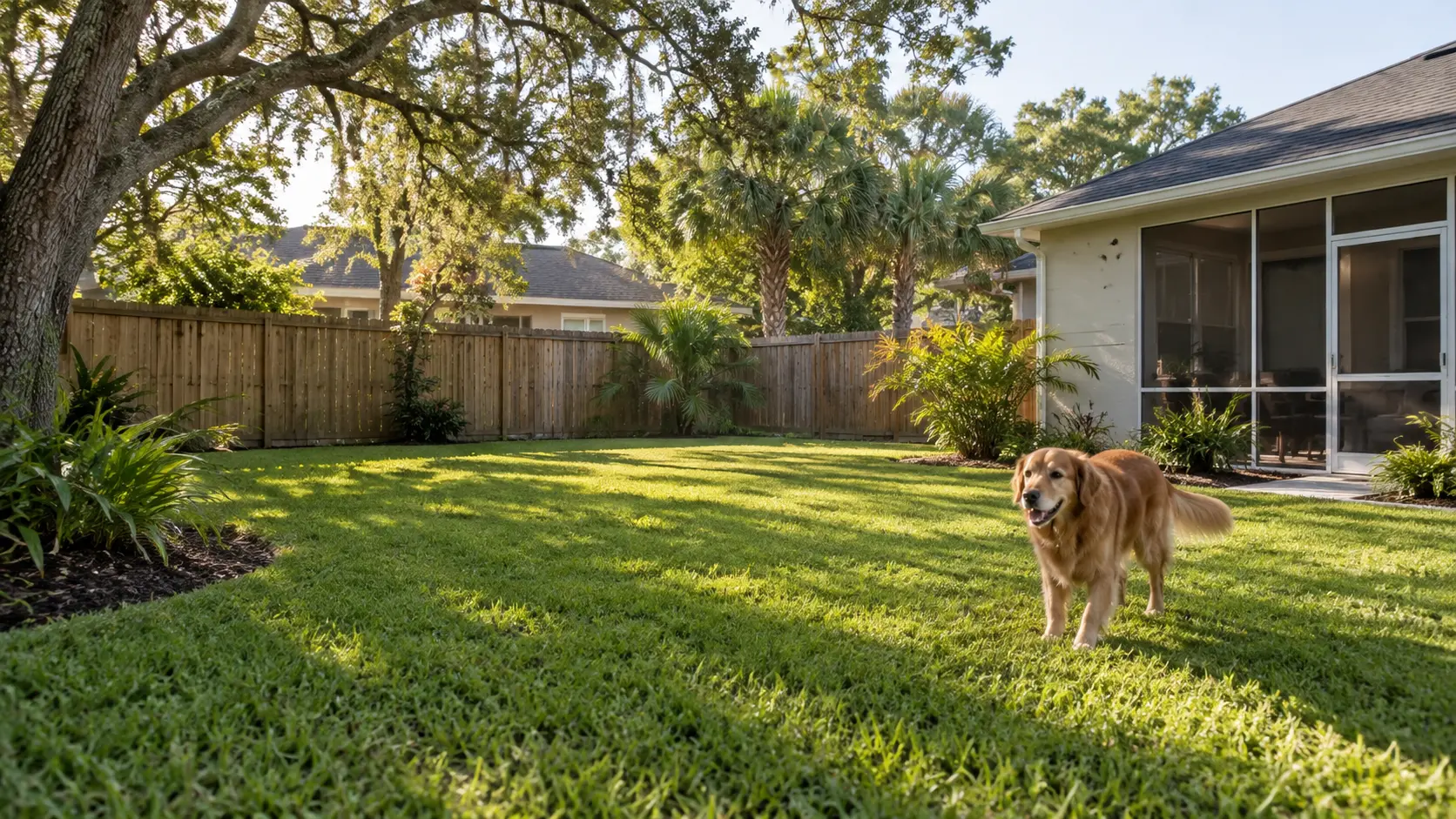
A dog fence should be planned around how your pet could get out—not only around which fence material looks best.
Wood, vinyl, chain link and aluminum can all be considered. The right layout depends on jumping, digging, gaps, gates, grade and the yard itself.
- Jumpers
- Diggers
- Small Dogs
- Gate Gaps
- Sloped Yards
- Physical Fencing
Quick Answer
What Type of Fence Is Best for a Dog?
There is no single best dog fence for every Jacksonville yard. Start with how the pet could escape. Small dogs may need closer openings. A known jumper may need more available height. A digger needs careful attention to bottom gaps, and every containment fence needs a gate that closes without leaving an easy escape point.
Wood, vinyl, chain link and aluminum can all work in the right setting. This page focuses on physical fencing, not underground-wire, wireless or collar-based electronic containment systems.
Containment First
How Could Your Pet Get Out?
A useful pet-fence plan starts with four possible escape routes: over, under, through or at the gate.
Jumping Over
If your dog already jumps or climbs, consider available height, nearby grade and objects close to the fence before choosing a layout.
Going Under
Changing grade, erosion, low spots and openings beneath gates can create escape points even when the rest of the fence looks secure.
Using an Opening
Puppies and smaller dogs may fit through picket spaces, damaged boards, mesh openings or gaps beside a gate.
Getting Out at the Gate
A sagging, dragging or poorly aligned gate can create bottom or side openings even when the surrounding fence remains usable.
Small Dogs & Puppies
Small Pets Need More Attention to Openings
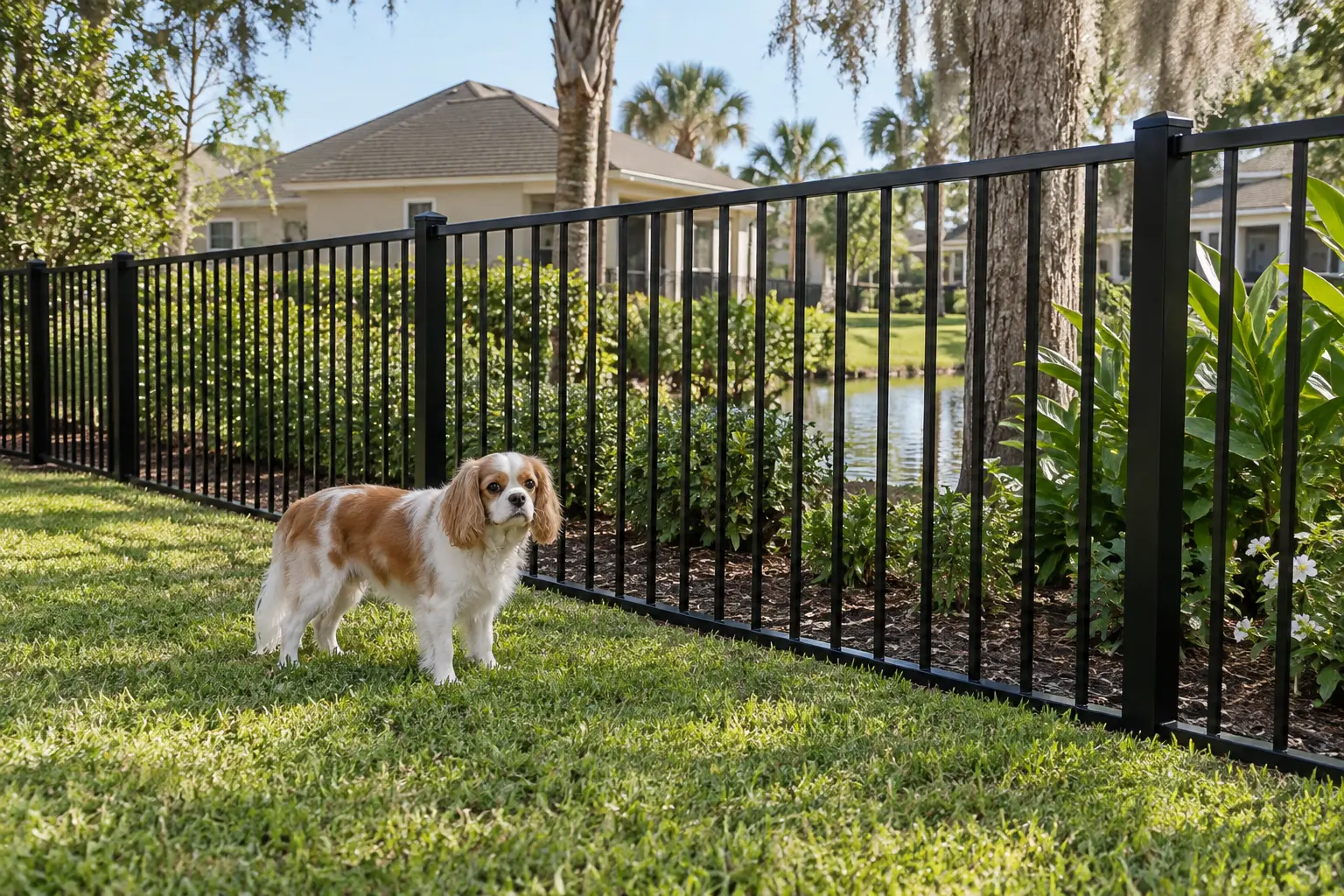
A yard can appear enclosed while still leaving openings a puppy or small dog can use.
Picket Spacing
Open aluminum fencing can suit many yards, but the spacing needs to be evaluated for the actual pet.
Bottom Gaps
A small dog may fit beneath an opening that a larger dog cannot, especially where the ground rises or falls.
Gate Edges
Check beneath the gate and along the hinge and latch sides, where openings can be wider than the main fence.
Existing Damage
A broken board, bent picket, damaged mesh section or failed panel can create an escape opening.
Behavior Matters More Than Breed
Jumpers, Diggers, Climbers and Gap Finders Need Different Planning
Dog size helps narrow the options, but known escape behavior is more useful than a breed-based fence-height chart.
Known Jumper
Consider available height, the grade inside the yard and objects close to the fence that change how high the barrier feels from the pet’s side.
Known Digger
Focus on low spots, drainage paths, erosion and spaces beneath gates rather than only the top of the fence.
Climbing Behavior
If the pet already climbs fencing, the structure and openness of the selected layout deserve extra consideration.
Gap Finder
Some pets repeatedly test corners, gates and damaged sections, so the continuity of the full enclosure matters.
More Than One Pet
Plan around the most demanding containment need if multiple pets use the yard.
Cat Containment
Do not assume a standard dog-oriented backyard fence will reliably contain a cat; cats can climb or jump many residential fence layouts.
Intent Clarification
Physical Dog Fence or Electronic Fence?
This service page is about visible physical fencing such as wood, vinyl, chain link and aluminum.
Physical Fence
Creates a visible yard boundary. Openings, gates, height, material and grade are planned around the pet and property.
Electronic / Underground System
Underground-wire, wireless and collar-based containment are different systems and are not the focus of this page.
What to Decide First
If you want a physical boundary, start with how the pet escapes and then compare suitable materials.
Compare Physical Fence Options
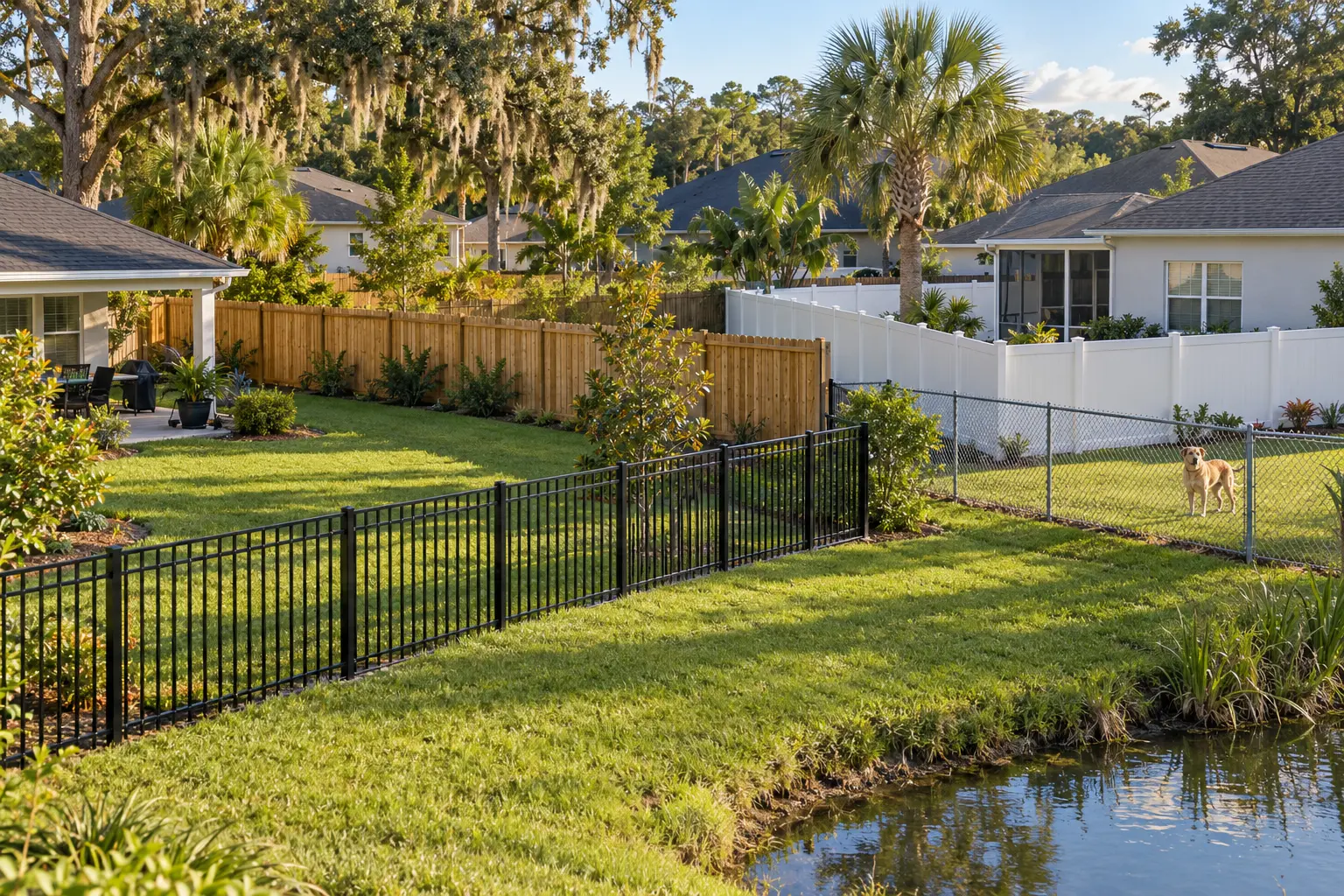
Wood, Vinyl, Chain Link or Aluminum for Dogs?
Material should be evaluated through the containment problem, not treated as the starting point.
| Material | Containment advantage | Main thing to check |
|---|---|---|
| Wood | Can provide a solid visual boundary | Bottom gaps, board condition and gate condition |
| Vinyl | Can provide solid screening with low finish maintenance | Panel condition, gate gaps and grade transitions |
| Chain link | Maintains visibility while creating a physical boundary | Mesh condition, bottom line and climbing behavior |
| Aluminum | Provides an open appearance and clear boundary | Picket spacing, especially for small pets |
| Privacy-style fence | Reduces direct visual contact outside the yard | Height, site exposure and property restrictions |
Visibility Choice
Open Visibility or Solid Screening?
Some yards benefit from an open view, while others need more visual separation from outside activity.
Open Visibility
Chain link and aluminum keep more direct visibility through the fence.
Solid Screening
Wood and solid vinyl can reduce direct visual contact with neighboring dogs, pedestrians or street activity.
No Behavior Guarantee
More visual screening should not be presented as a guarantee that barking, reactivity or other pet behavior will change.
Containment + Access
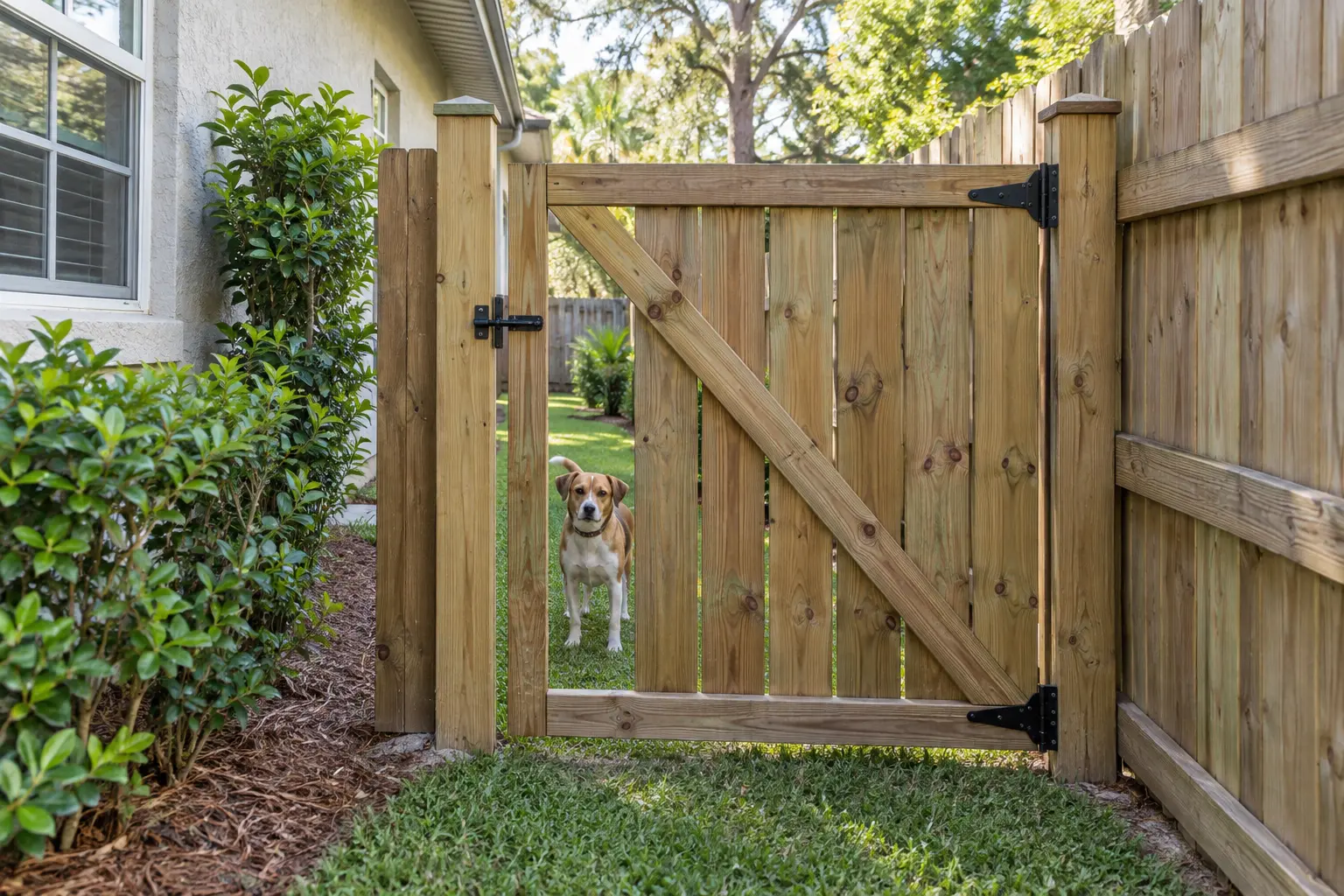
The Gate Is Part of the Containment Plan
A pet fence should be considered as one continuous enclosure, including every access point.
Bottom Clearance
A sagging gate or changing grade can create an opening beneath the gate.
Side Gaps
Spaces beside the hinge or latch side may be wider than openings in the main fence.
Closing and Alignment
A gate that does not close fully can become the weakest point in an otherwise useful fence.
Access Width
The opening may also need to accommodate people, lawn equipment, bicycles or routine yard access.
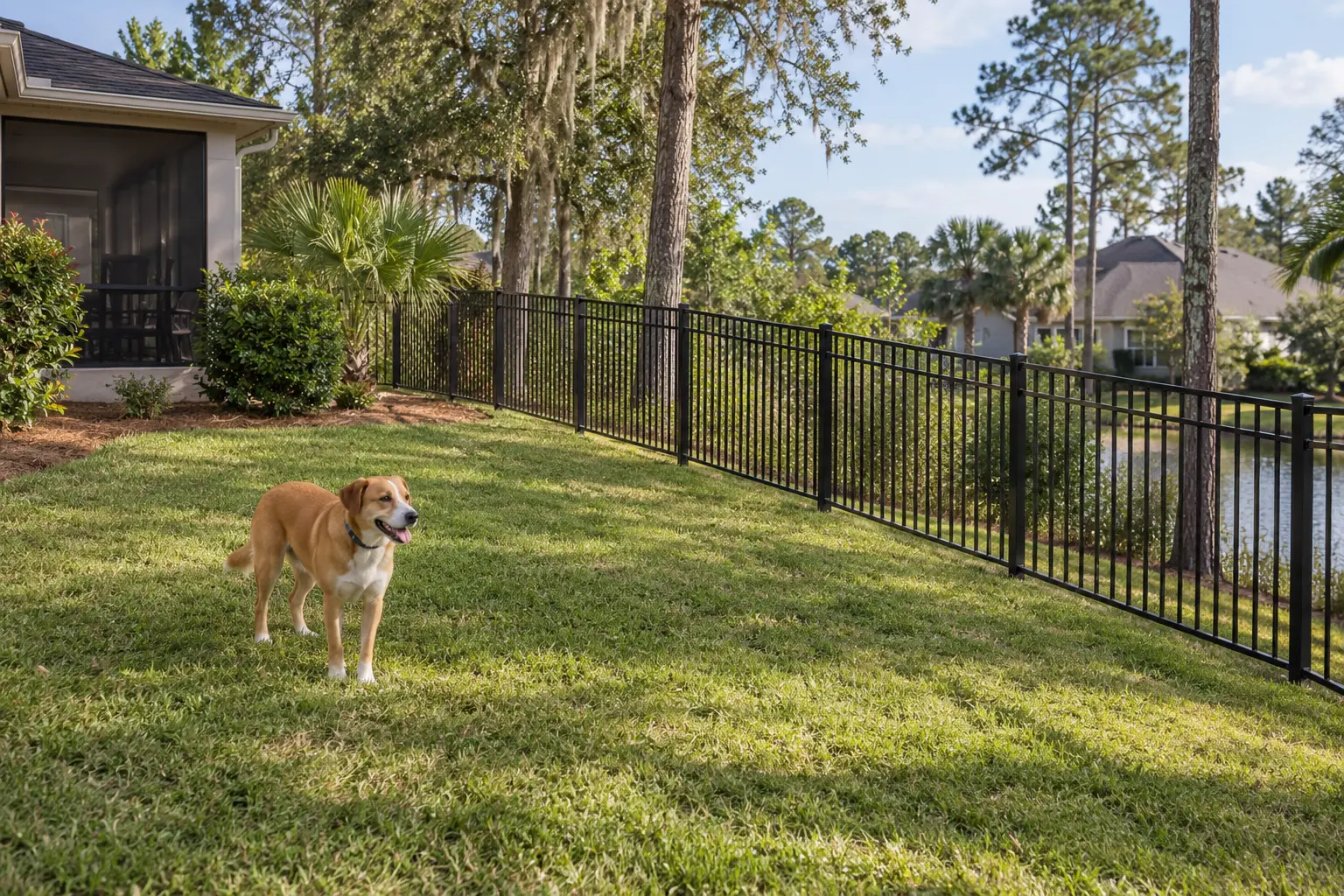
Grade & Bottom Gaps
Slopes Can Create Pet-Escape Gaps
Changing grade can create larger openings beneath fence sections even when the nominal fence height is appropriate.
Check stepped sections, transitions between level and sloped ground, drainage paths and the space beneath gates. This matters especially for smaller pets and dogs that already test the lower fence line.
Existing Fence Decision
Repair, Redesign or Replace the Existing Fence?
Not every containment problem requires a completely new fence.
| Existing condition | Better starting point |
|---|---|
| One broken board or panel | Fence repair |
| Gate no longer closes properly | Gate repair |
| Gap caused by changing grade | Assess the fence line and ground condition |
| Several leaning posts | Compare repair with replacement |
| Fence is sound but openings are too large | Evaluate a different layout |
| Current material does not fit the containment need | Compare redesign or replacement |
| Old fence needs to come out | Fence removal + installation planning |
Jacksonville Planning
Dog Fence Height, Property Lines and Local Conditions
Pet containment still has to fit Jacksonville zoning, boundary, easement and utility conditions.
Animals at Large
Jacksonville generally prohibits an owner or temporary custodian from allowing an animal to be at large, subject to stated exceptions. This does not mean every dog owner is required to install a fence.
Fence Height
Jacksonville generally allows fencing up to 4 feet within the required front-yard setback and up to 8 feet farther toward the rear, subject to zoning and site conditions.
Property Lines
Curbs, sidewalks and existing fences do not prove the legal boundary. Jacksonville recommends a survey for accurate property-line determination.
HOA or Deed Restrictions
Private community rules can be separate from City zoning and may affect material, height, style or color.
Easements
If the enclosure depends on a fence line within an easement, confirm who controls it and what access obligations apply.
Underground Utilities
Sunshine 811 says a locate request should be made at least two full business days before digging. Member utilities or their locators perform the markings.
Permit or Review Check
Requirements can vary by project and property. If the fence affects a public right-of-way, Jacksonville has a separate right-of-way permitting process. Confirm the requirements that apply to the property before construction.
Special Property Conditions
Dangerous-Dog, Pool and Historic-Property Notes
Most residential pet-fence projects will not involve these situations, but each one can change what is required.
Legally Declared Dangerous Dogs
Do not assume a standard backyard dog fence satisfies Jacksonville’s separate enclosure requirements for a dog that has been legally declared dangerous. Confirm the current requirements before planning the enclosure.
Pool Areas
A pet fence does not automatically satisfy Florida residential pool-barrier requirements. If the same fence will also serve as part of a pool barrier, separate height, opening, placement and gate requirements need to be considered.
Historic Properties
Locally designated Jacksonville historic-district properties and local landmarks can require Historic Preservation review for fencing and other site work.
Project Scope
What Affects Dog & Pet Fence Cost?
A useful pet-fence quote depends on the actual property and containment problem rather than one generic per-foot figure.
| Cost factor | Why it matters |
|---|---|
| Fence length | Determines overall project size |
| Fence height | Changes material and structural scope |
| Material | Wood, vinyl, aluminum and chain link differ |
| Opening requirements | Small-pet needs may affect the suitable layout |
| Gates | Add access points, hardware and layout considerations |
| Slopes | Can create bottom gaps and transitions |
| Existing fence | Repair or removal can change the scope |
| Vegetation and access | Can affect working conditions |
| Property-line uncertainty | A survey may be needed |
| HOA, easement or historic conditions | May affect the final layout |
Helpful Details
What to Tell Us About Your Pet and Yard
You do not need to know the exact fence material before getting started.
Pet Details
Approximate pet size, number of pets and whether the pet jumps, digs, climbs or squeezes through gaps.
Current Fence
Whether a fence already exists, where the problem is and whether the gate closes properly.
Yard Conditions
The area you want enclosed, slope or grade changes and any known HOA, pool, easement or historic-property conditions.
Best Starting Question
How does your pet try to get out—over, under, through, or at the gate?
Related Fence Services
Continue With the Service That Fits the Yard
Use a dedicated service page when the main need is material-specific, gate-related, repair-focused or livestock/acreage fencing.
Common Questions
Dog & Pet Fence FAQs
Common questions about materials, height, small dogs, digging, repairs and sloped yards.
What type of fence is best for dogs in Jacksonville?
There is no single best material for every dog. Wood, vinyl, chain link and aluminum can all work depending on the pet and yard. The key questions are whether the pet jumps, digs, climbs or fits through openings, along with gate condition and property layout.
How tall should a dog fence be?
There is no universal height based only on breed or dog size. Known jumping or climbing behavior, yard grade and fence location should all be considered. Jacksonville generally allows up to 4 feet within the required front-yard setback and up to 8 feet farther toward the rear, subject to zoning and site conditions.
What type of fence works for small dogs or puppies?
Pay close attention to picket spacing, openings beneath the fence, spaces beside gates and grade changes. A fence that contains a larger dog can still leave openings a puppy or smaller pet can use.
Is chain link a good fence for dogs?
Chain link can provide a practical physical boundary while maintaining visibility. Mesh condition, the lower fence line, gate openings and the individual dog’s climbing or escape behavior still need to be considered.
Is wood or vinyl better for a dog fence?
Both can work well. Wood can offer flexible layouts and solid screening, while vinyl can provide uniform solid panels without normal wood staining. The better option depends on the pet, yard, maintenance preference and desired visibility.
What should I check if my dog digs under a fence?
Check low spots, erosion, changing grade, drainage paths and openings beneath gates. Understand the cause before deciding whether repair, layout changes or other site work is needed.
Can an existing fence be repaired for pet containment?
Often, when the problem is localized. A damaged board, panel, post or gate may be repairable. If the structure is failing or the overall layout does not suit the pet, redesign or replacement may be more appropriate.
Can a dog fence work on a sloped yard?
Yes, but changing grade can create larger openings beneath fence sections or gates. The layout should account for those bottom gaps, especially for smaller pets or dogs that already test the lower fence line.
Start With the Escape Problem
Request Dog & Pet Fencing in Jacksonville, FL
Is your pet trying to go over, under, through or out at the gate? Start there, then consider pet size, openings, visibility, available height, gate condition, yard slope and the existing fence.
You do not need to know the exact material before getting started.